
Start with recent sales of land like yours, then check the details behind each price. If your map, tax record or deed seems wrong, keep the papers and ask for help with the difference. You can begin a price discussion without guessing about acreage, boundaries or ownership.
Check a Record Difference Before Using It to Set a Price
Find a recent tax bill, the land ID number and any deed, map or survey you have. A deed is the paper used to transfer ownership. A survey shows measured land lines. If the acres or location do not agree, keep copies of each version rather than choosing the one with the highest number.
Bedford County’s map help page separates two kinds of problems. For a feature shown in the wrong place on the map, it points to the county’s map staff. For related property information, such as ownership, assessed value or buildings, it points to the Commissioner of Revenue’s Office.
That gives you a place to ask a clear question: “This map seems to show my land in the wrong place,” or “This property record lists a building I need help checking.” Send the record details to the right office when you contact it. A county correction question is different from asking a buyer what they will pay.
A map does not settle every boundary or access issue. Tell an agent or buyer what differs and ask the closing professional what must be checked before signing. You do not have to promise that a county display, old deed or neighbor’s memory is the final answer.
Describe the Land You Intend to Sell
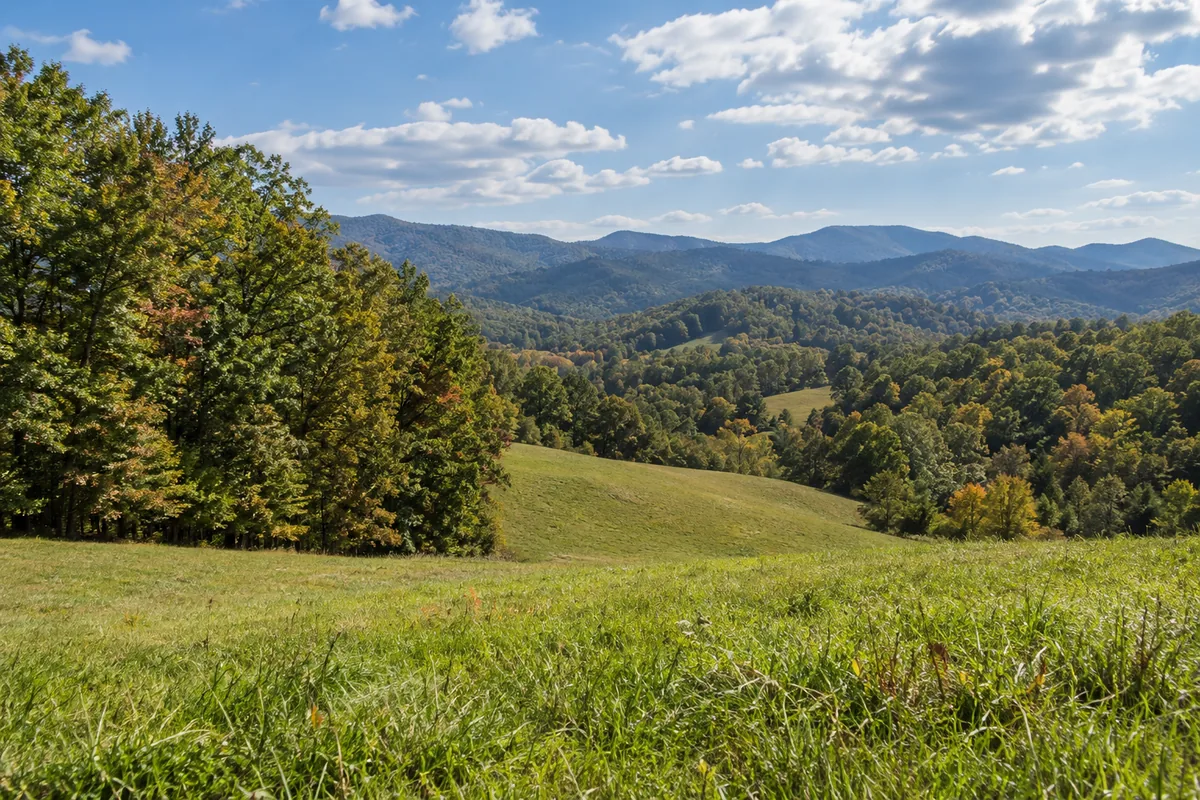
Make a short list of the location, acres as shown in your papers, each land ID number, buildings and how you get onto the land. Write down whether it is open, wooded or mixed. Add any known shared use or agreements. Mark what you do not know.
If several pieces make up your property, say whether you want to sell all of them together. Do not assume one address or tax record covers the whole sale. Ask a buyer to put the intended pieces in writing so you can compare the offer with the land you meant to sell.
If the records disagree on size, explain that before using a price per acre. For a made-up example, an $80,000 price divided by 8 acres is $10,000 per acre. Divided by 10 acres, it is $8,000 per acre. That arithmetic does not tell you which acreage is correct. These are teaching numbers, not Bedford County sales.
You can ask about selling before paying for new work. Ask whether a survey or other check is needed for your situation and who would pay for it. Avoid clearing trees or changing the property just to match another listing unless you have a clear reason.
Choose Sales That Help Explain Your Price
Ask an agent or appraiser for completed sales similar to your land in size, location, buildings and access. Keep bare land apart from property with a house. A small home lot may have a very different price per acre from a larger rural tract.
For each example, keep the land ID, sale date, acres, price and source. Ask whether the stated price covered one tract or several together. Check that it was a completed sale rather than an asking price. Keep uncertain examples aside until the details can be checked.
A repeated online listing is not another sale. Check the identity of the property and transaction before counting it. Similar town names or prices are clues to investigate, not enough to prove a match. A long list of unchecked entries will not give you a dependable county average.
Ask why each sale fits your property and what important differences remain. Use a price range when the evidence is thin. If the suggested price depends on future building approval or a land split, ask what supports that idea. You do not need to plan a buyer’s project to start selling.
Compare the Price With the Terms
You can list with a land agent, find a buyer yourself or request a direct offer. Ask an agent about the sale evidence, fee and marketing plan. Selling yourself means handling questions and visits. A direct offer is another choice to compare; it does not require accepting the first price.
Ask what costs you would pay and what loan or tax balances would come out of your payment. Check the deposit, buyer checks, cancellation terms and target closing date. Find out what still needs to happen before that date.
Put the answers side by side with our land offer worksheet. The guide to selling land in Bedford County covers the broader process. Reelvest can be one direct offer you compare if we can make an offer for the land.
If you are handling inherited land or helping settle a loved one’s estate, gather the available papers and ask who needs to sign. You can start with what you have and a short list of questions.
Questions About Bedford County Land Value
What if my map and property record do not agree?
Keep copies of both. Bedford’s map help page points map-display questions to its map staff and property-information questions to the Commissioner of Revenue. Ask a closing professional about any boundary or ownership issue before signing.
Should I use the highest acreage shown to set my price?
No. Explain the difference and ask for help checking it. A price-per-acre calculation changes with the acreage, but the calculation does not prove which number is right.
Can I ask about selling while records still need checking?
Yes. Share the location and papers you have, and explain what remains unclear. Ask what must be resolved before an agreement or closing.
Do I have to choose Reelvest to use this guide?
No. You can use these steps to compare an agent listing, a sale you handle yourself or a direct buyer. Reelvest can be one offer you consider.
Local source links reviewed October 6, 2026.