
The best first estimate comes from land like yours that has sold. Compare the acres, useful ground, road access and what was included. A price per acre from a house sale or a very different tract can send you in the wrong direction.
Gather the facts you already have
Start with a tax bill, your deed and any survey you can find. Write down the parcel number, acres and location. A parcel number is the number the county uses to identify a piece of land. If your property has more than one number, list them all.
The Cocke County Property Assessor values property for tax purposes. The office is at 111 Court Avenue, Room 112, Newport. Call 423-623-7024 if you need help with the tax record.
The county explains that real property includes land, buildings and other improvements. Before using a record's total value to price empty land, check what that total includes. A tax figure isn't a promise of what a buyer will pay.
Find a missing deed without starting over
If your deed is missing, contact the Cocke County Register of Deeds at 423-623-7540. Have the owner's name and any older deed reference handy. Ask how to get the copy you need and what it will cost.
The office keeps recorded papers, but its staff don't prepare documents or do title searches. For questions about ownership or who must sign, use the closing team or a lawyer.
If you're handling inherited land or helping settle a loved one's estate, share the papers you already have. You can ask about options before every paper is in place. Check who needs to sign before promising a closing date.
Compare land a buyer could use in a similar way
Start with nearby completed sales of a similar size. Then look beyond the acre count. An open field with an easy entrance may be a poor match for a wooded slope reached by a shared lane.
- Location: Compare the setting and the trip from the road to the land, not just the county name.
- Ground: Note open areas, steep slopes and wet spots. Acres that are easy to use can matter more than a larger total.
- Access: Describe the actual entrance and any shared road. Keep papers about the right to use it.
- What was included: Separate empty land from property with a house, cabin, barn or several parcels.
- Date: Use recent sales when possible. Ask why an older sale still helps with today's price.
If you can't find close matches, ask a local land agent for help. A few carefully chosen sales are better than a long list of properties with little in common.
Describe the land as you know it
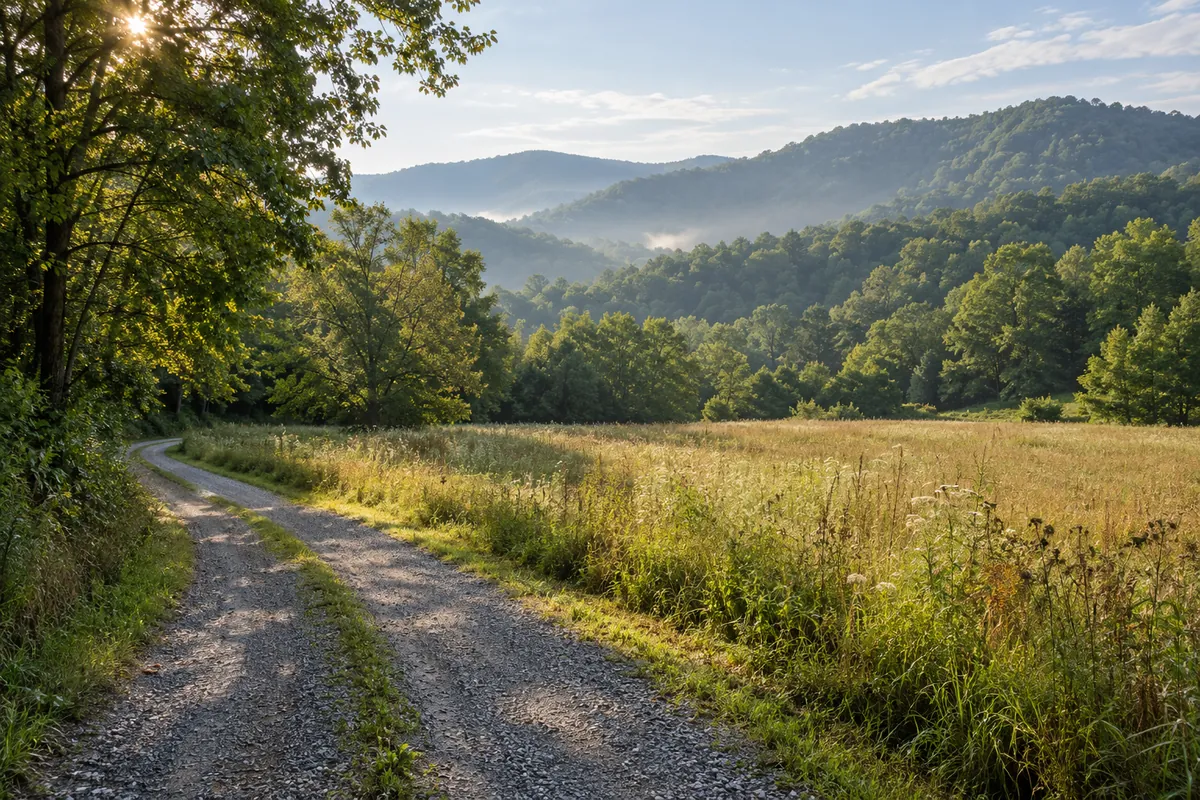
You don't need a report full of technical words. Write down how you reach the property, where it is open or wooded, and what you know about its use. Add clear photos of the entrance and the main features.
For example: “The lane is gravel. The front is fairly level, and the back rises into woods. A neighbor also uses the lane.” That gives a buyer a useful first picture. Save any agreement about road care.
Share known problems, including damaged access or areas that get wet. Don't guess that all the land can be built on because a nearby property has a house. If a buyer plans to build, ask what they need to check and how that affects the offer.
Check the sale, then compare the numbers
Make one line for each useful sale. Include its parcel number, date, acres, price, buildings and access. Keep a source link and deed reference if you have them. The same sale may appear on several sites; don't count it several times.
Check whether one sale included several parcels. Dividing the full price by the acres of just one parcel makes the price per acre look too high. A sale with a home can't be treated as a land-only sale without more work.
Here is made-up math: $60,000 for ten acres is $6,000 per acre. That isn't a Cocke County market price. It only shows the calculation. If much of one tract is steep and another has an open field, the matching calculation doesn't make them equal.
Use the best matches to discuss a price range. Ask anyone giving you a price to show which sales they used and why those sales fit.
Check farm and tax papers before agreeing to terms
If your bill shows a farm or special tax program, keep those papers with the deed. Ask the Assessor how a change in ownership or use could affect the property. Ask the closing team what amounts, if any, need to be addressed in the sale.
Write down any crop, grazing or other agreement with someone using the land. Tell the buyer what you know about when that use ends. You don't need to guess at a tax bill or end an agreement just to ask for an offer.
Compare the offer with the work and costs
There are several ways to sell. An agent can market the land and help compare offers. Ask what the service costs and how the asking price was chosen. Selling yourself means taking calls and working through offers on your own. A direct buyer is another option to compare.
Ask who pays each cost, whether the buyer needs a loan and what checks could change the price. Read the time allowed for those checks. Ask for an estimate of the money you keep after agreed costs and any amounts still owed.
If you'd like a direct offer as one of your options, tell Reelvest about your Cocke County land. For more help choosing sale matches, see our land value guide.
Questions About Cocke County Land Value
Is my tax value the right asking price?
It is a tax record, not a buyer offer. Check whether it includes buildings, then compare similar completed land sales.
Should I use the same price per acre as a nearby listing?
Use it as a question to explore. Check whether the property sold and whether its ground, access, size and buildings are like yours.
What if part of my land is steep?
Describe it clearly and compare land with similar ground. An acre count alone does not show how much ground is easy to use.
Can the Register of Deeds tell me who should sign?
The office can help with recorded documents, but does not do title searches or prepare papers. Ask the closing team or a lawyer about signing.
Local source links reviewed October 5, 2026.