
Start with recent completed sales of land in a similar location and with a similar use. A small lot with checked services and a larger wooded tract need different matches. Look at what each buyer got before using a price per acre for your land.
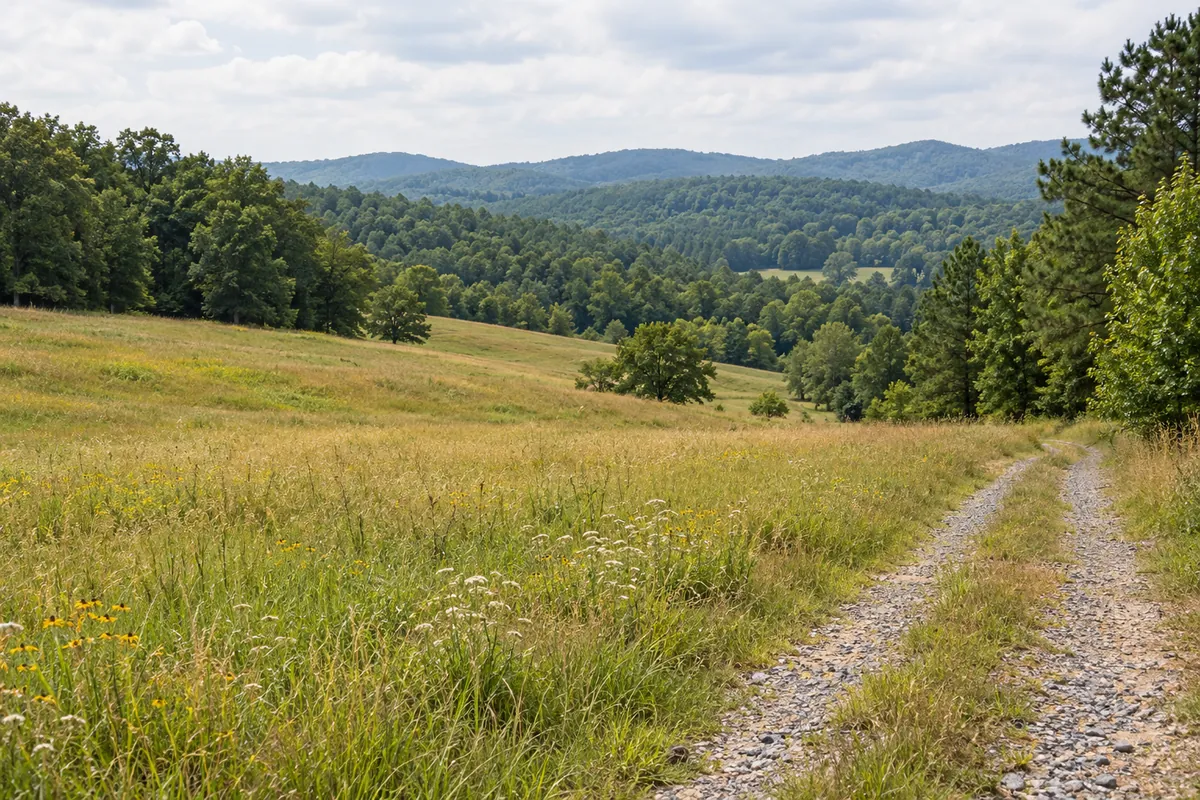
Find the land you plan to sell
Pull out a tax bill or deed. Write down the land ID, acres and closest road. A land ID is the number used to identify one piece of land. List each piece if you plan to sell several together.
The county’s Real Property Search lets you choose a tax year and search by name, street, map number or subdivision. The map number can help if empty land has no street address. A subdivision is a named area divided into lots.
Save the record that matches your papers. Keep its tax year and each value’s label with your notes. A figure from a tax record is not the same as an offer from a buyer.
Compare location and use before comparing acres
Tell a local land agent where your land is and what kind of ground you have. Ask for recent completed sales with a similar size, location and likely use.
For a small lot: Compare the street, entrance and services you have checked. A connected water line is different from one nearby. Keep any service papers or approvals you already have.
For wooded acreage: Compare the slopes, useful open space and how someone reaches the land. A large tract can have parts that are hard to use. Total acres alone do not show that.
For mixed ground: Note fields, woods and buildings separately. Ask why each sold tract belongs in your list. Nearby land can still be a weak match if it serves a different buyer.
Use deed records to help check a promising sale
Ask your agent to help verify the sale date, full price, all land IDs and what buildings or other tracts came with a deal. Save a recorded reference with your notes.
The Greenville County Register of Deeds links to public records searches. Its page says online access is free, while certified copies have a fee. Call 864-467-7240 to ask which paper or copy would help before paying for one.
Finding a recorded paper helps identify the deal. It does not prove that the sold land is a fair price match. Keep the whole deal on one row even if several addresses show up in records or ads.
Separate existing features from a buyer’s plans
Write down what you know about the entrance, water, power and buildings. If the route crosses other land, keep any lane agreement you have. Share questions that remain unchecked rather than guessing.
If a buyer hopes to build, share existing approvals and explain what has not been reviewed. Don’t treat a map or an old ad as proof that the tract is ready for that plan.
You don’t need to design the buyer’s home to begin pricing. You do need to compare known services and useful ground fairly. Ask which improvements would matter, and weigh their cost before doing work just to sell.
Make a short list of checked deals
| Write down | What to check |
|---|---|
| Sale date, full price and reference | Did the sale close? |
| All land IDs and total acres | What did the buyer get? |
| Location, ground and services | Does it fit my tract? |
| Buildings and large differences | What should the agent explain? |
Keep asking prices in a separate list. Don’t count one deal twice because it appears under several addresses. Leave a sale out of the main support for your range if its details cannot be checked.
Here is a made-up example. Five acres sold for $150,000, or $30,000 per acre. If a house came with the deal, that is not a supported price for five empty acres. These are teaching numbers, not Greenville County sales.
Ask your agent which checked deals support a starting range and why. If the land is unusual or you need a formal value, ask about an appraisal and its cost. An appraisal is a professional opinion of value for a stated purpose.
Compare the price with the money you keep
You can list with an agent, sell yourself or compare a direct offer. Consider the work, time and seller costs for each route.
Get the price, costs you pay, planned closing date and buyer’s right to cancel in writing. Check any loan or tax balance that may come out of your payment. Our offer comparison worksheet helps you put the choices side by side.
The South Carolina land seller guide covers general selling steps. If you’d like a direct Reelvest offer to compare, tell us about your land. You decide whether it fits.
Questions About Greenville County Land Value
What if my land has no street address?
Use the map number from your tax bill or deed, or try the owner-name search. Save the record that matches your land rather than inventing an address.
Can I compare a serviced lot with wooded acreage?
Look for completed sales with a similar location, size and use. Slopes, entrance and checked services can make those properties very different matches.
Is a recorded deed enough to choose a price?
It can help identify the sale. You still need to check the price, what came with the deal and whether the land fits yours.
Should I use advertised prices as sale prices?
Keep asking prices separate. Ask a local land agent for completed deals and check their details before using them to support a range.
Local source links reviewed October 6, 2026.