
Start with recent completed sales of land like yours in Georgetown County, South Carolina. Compare the size, way in, ground and what each buyer received. A county average, asking price or tax value cannot tell you what your land will sell for. Use the steps below to build a useful price range.
1. Find the Right Piece of Land
Find a tax bill, deed or old survey. Copy the land number, acres if known and nearest road. Georgetown calls its land number a TMS number or PID. It is the number used to identify a piece of land.
The county’s Online Services page has separate links for Assessor records and Register of Deeds records. Start with the Assessor to help identify the land and its tax record. Call 843-545-3017 if the right record is hard to find.
Check the location and acres, not just the owner’s name. A mailing address may be where the owner lives rather than where the land is. If several pieces belong to the same person, keep a separate note for each.
The county-linked Assessor website has a Search Records link and a notice that data may not reflect the newest records. Keep the record date with your notes. A tax value is different from a buyer’s offer.
2. Check What a Completed Sale Included
Ask a local land agent or appraiser for recent completed sales a buyer would compare with yours. Ask how the final prices were checked and what that help costs. An ad marked sold is a lead to investigate, not the whole answer.
The Georgetown County Register of Deeds keeps recorded property papers. Its deed FAQ says a deed can be located using an approximate sale date and the seller or buyer named on it. Call 843-545-3088 about a copy and its cost.
The county also links its online deed records. That site explains that some records are still being processed. If something is missing or unclear, ask the office for help rather than assume there was no sale.
Keep the sale date, full price, land numbers, acres and deed reference together. Check whether the buyer received a house, several lots or other items. A price for a whole deal should not be assigned to just one piece. A deed copy is useful, but it is not a full check of ownership or other claims.
3. Choose Sales That a Buyer Would Compare With Yours
Nearby land can be a poor match if the buyer received something different. Match the main features before comparing the price.
- Size: Compare a small lot with similar lots and a larger tract with similar acreage.
- Way in: A roadside parcel differs from one reached by a long shared route.
- Ground: Compare woods, open areas and wet ground with similar land.
- Water: Check actual frontage and access, not just a nearby creek or a view.
- Included items: Note a house, buildings, working connections and other land sold together.
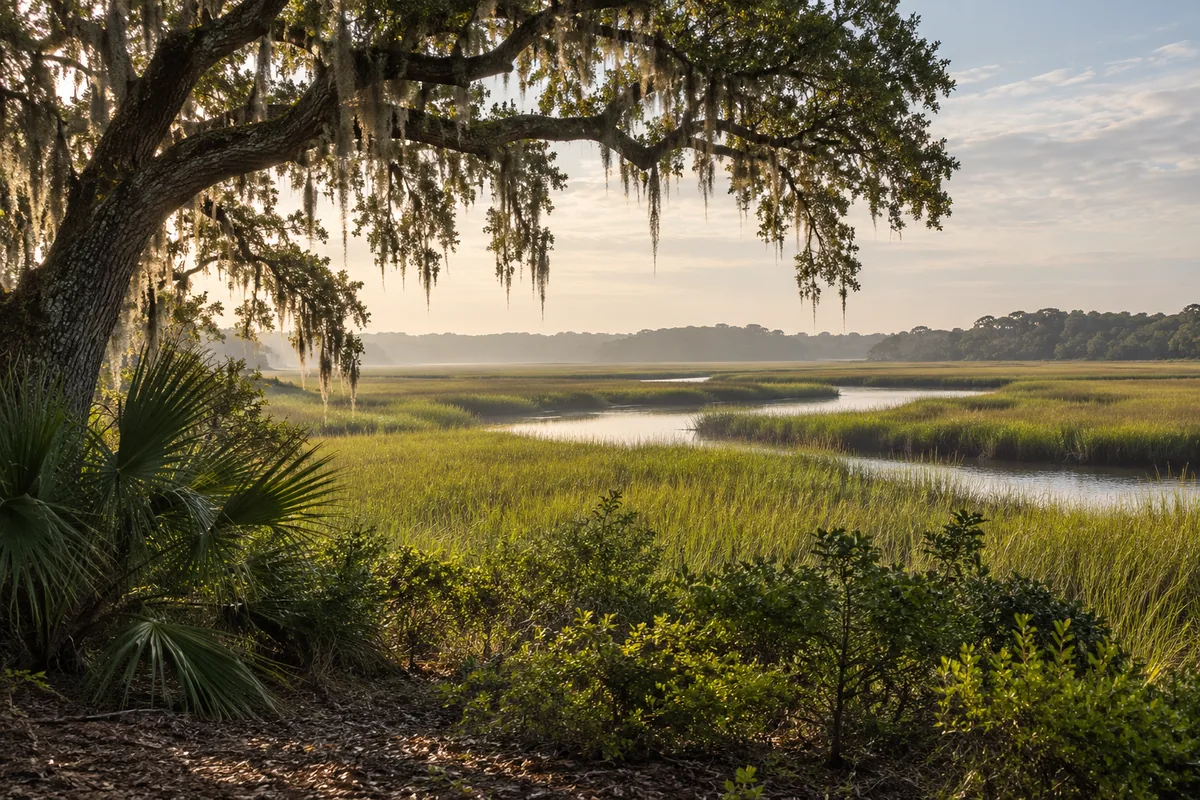
If your land is near marsh or water, describe what is on your piece and what you know about reaching it. A water view does not mean the same thing as usable water access. Don’t turn a photograph or map into a promise about a future dock or home.
For wooded acreage, compare the way in and amount of open ground as well as size. For a lot, note any written rules or fees you already have. You don’t need to plan a buyer’s project to begin a price discussion.
Mark unknown details. A local land agent or appraiser can explain why a tempting example is a weak match. Keep the reason with the sale instead of dropping it into an average.
4. Put the Useful Sales Side by Side
For each sale, write one short row with the date, full price, acres, land numbers and included items. Add the source of the price and the deed reference. Then note the biggest difference from your land.
Price per acre means the full sale price divided by the acres included. Here is made-up math to show why the full deal matters:
- A $120,000 sale covering 20 acres works out to $6,000 per acre.
- If that same $120,000 covered two 20-acre pieces, it is $3,000 per acre for the whole 40-acre deal.
- If a house was included, neither number is a land-only price without more work.
Those are examples, not Georgetown prices. Keep the full price next to the per-acre figure so it is easy to check. Count a deal once even if several websites show it.
Don’t mix active asking prices, tax values and completed sales in one average. They answer different questions. A bargain or an unusually high sale can also pull an average away from the land buyers would compare with yours.
5. Discuss a Range and the Reasons Behind It
Use the best matches to discuss a price range with a local land agent or appraiser. Ask which examples matter most, how recent they are and what makes your land different.
If there are few useful sales, widen the time period or search area with care. Keep those differences in your notes. Don’t hide a weak match by averaging it with stronger ones.
A range leaves room for real differences in access, ground and included items. It is more useful than a precise-looking number built from unclear records. Our land value guide explains other price factors.
If a paper or detail is missing, you can still start a discussion. Say what you know and what has not been checked. Our land seller document checklist can help you gather the basics.
6. Compare the Money You Would Keep
A likely selling price and the money you keep are different. Ask for a written estimate of closing costs, any agent fee, loan payoff and unpaid taxes. For example, a $50,000 price less $3,000 in costs leaves $47,000 before a loan or tax balance. That is simple example math, not an estimate for your land.
Compare an agent listing, selling yourself and a direct offer against your goals. Each takes a different amount of work. Ask about the price, costs, target date and what lets a buyer cancel or ask for a lower price.
Use our land offer worksheet to compare written offers. If you want another offer to consider, tell Reelvest about your land. You decide whether an offer fits.
For the next steps after pricing, read our guide to selling Georgetown County land or the South Carolina land seller guide.
Why This Page No Longer Uses the Old County Tables
The earlier page used a March 2026 listing snapshot. Those saved rows lacked the land and deed numbers needed to check separate sales and what each deal included. The old summary could not support a price estimate for your land.
This guide uses local record resources and practical comparisons instead. It does not claim a current county average or a new set of verified sales. Check the source and date of each example you use.
Questions About Georgetown County Land Value
Can a county average tell me what my land is worth?
No. Start with similar completed sales and check what each buyer received. Size, road access, ground and included items can change the comparison.
Where do I find Georgetown property and deed records?
The county’s Online Services page links Assessor records and Register of Deeds records separately. Use the Assessor for the land and tax record; the Register keeps recorded property papers.
What can help locate a deed?
The Register’s FAQ lists an approximate sale date and the seller or buyer named on the deed. Call 843-545-3088 about a copy and its cost.
Is a water view the same as water access?
No. Check what is on the actual piece and how it can be reached. A nearby creek or marsh view does not prove usable access or a right to build a dock.
How do I work out price per acre?
Divide the full price by all the acres included in the deal. Check for several pieces, a house or other items before treating the result as a land-only price.
What if there are few similar sales?
Ask a local land agent or appraiser to explain the best matches and their limits. A wider date range or area may help, but keep the differences visible.
Do I need every record before asking about an offer?
No. Start with the location and papers you have. Mark missing details and ask for help while comparing options.
Local source links reviewed October 7, 2026.