
Start with recent completed sales that buyers would compare with your land. Match the setting, access, usable ground and what was included. A tax value, old county average or asking price alone won’t tell you what your land could sell for today.
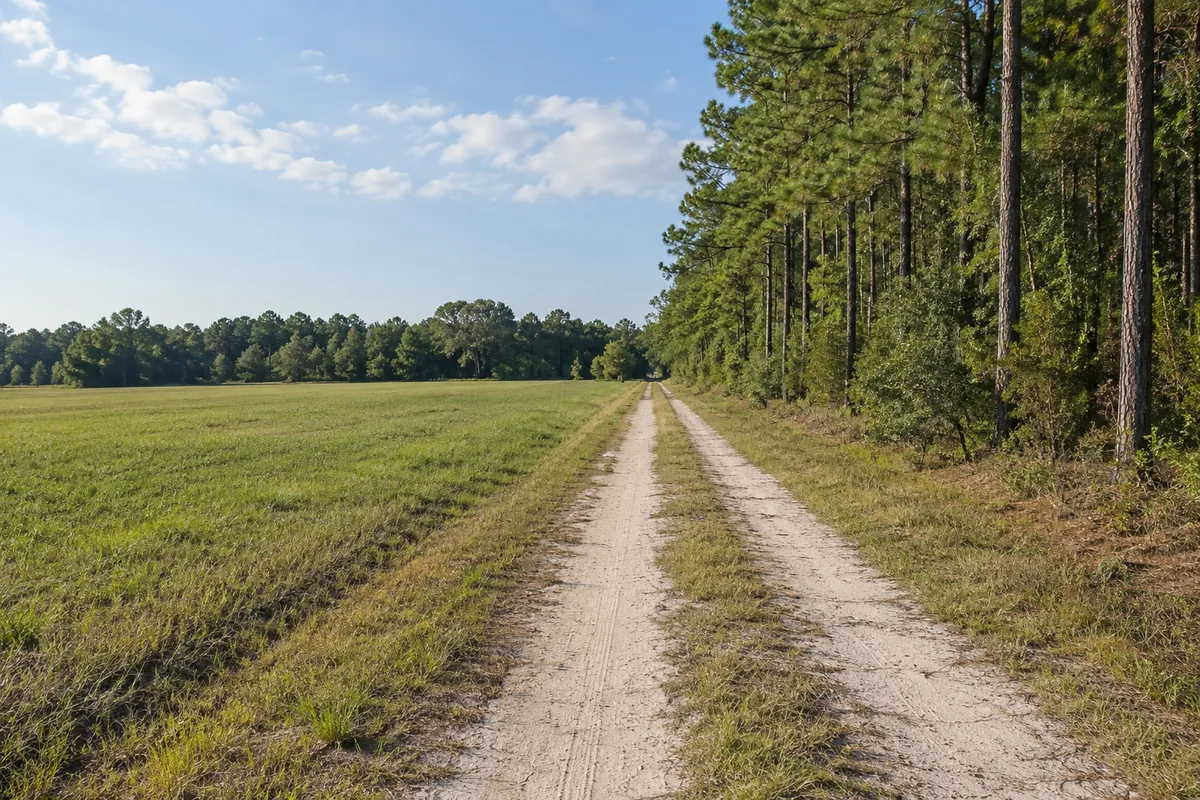
Make sure you’re pricing the right land
Start with your latest tax bill, deed or old survey. Write down the land’s location, size and TMS number. TMS is the county’s tax map number for a property. Keep that number with your notes so you don’t mix up nearby lots.
List every piece you want to sell. Is the sale for one lot or several together? Does it include a house, barn or other items? Your price comparisons need the same details.
Take clear photos of the entrance, open ground and woods from safe spots. Add any road-use papers, rental agreement or neighborhood rules you have. Mark missing answers as questions. You don’t need to solve everything before asking a land agent for help.
Find Berkeley County property records and maps
The county property-search page is the starting point for tax assessment records. Its public contact details list Real Property Services at 843-719-4061, 1003 Highway 52, Moncks Corner, SC 29461. Ask which record helps you check the land’s size and what a listed value includes.
The county’s Advanced Map guide explains searches by TMS number, owner name, address or street. It describes tax map lines, aerial photos and ways to save a map. GIS means the county’s online map system.
Use these tools to find the right land and note questions for the buyer. A map line isn’t a measured boundary. If a fence or driveway seems to cross the line, keep any survey or written agreement handy. A survey is a measured drawing of the land.
If the property record looks wrong, ask the assessor about that detail. Don’t change your asking price just because you found a number on a screen. Check what year it covers and whether it includes buildings.
Get a deed copy before paying an outside service
The Register of Deeds records deeds, plats and other land documents. A deed records a transfer of land. A plat is a drawing of a land division or survey.
The office’s page links to its land-records website and says copies of documents from 1983 onward can be obtained online at no cost. Older records may need a book and page reference or help from the office. Ask which copy you need before paying for a service.
For help, call 843-719-4084. The office lists 1003 Highway 52, Moncks Corner, SC 29461. Have the recorded owner’s name and any deed book and page numbers ready.
Finding a deed is a start, not a full ownership check. The Register says it doesn’t perform title searches or prepare deeds. Ask a real estate attorney to help with ownership or sale papers. If you’re handling land after the loss of a loved one, start with the papers you have and ask what else is needed.
Choose sales that a buyer would compare with yours
Ask a local land agent for recent completed sales and why each fits. An asking price is what the seller hopes to get. A completed sale price is what the buyer paid. Keep the two separate.
- Setting: Compare nearby roads, homes and the drive to services. The county name alone isn’t enough.
- Access: Compare the entrance and the written right to reach the land. A visible track may not settle who can use it.
- Usable space: Compare dry open areas, woods, wet spots and ground that would need work.
- Size and shape: Small home lots and large tracts may need different sales to compare.
- Water and power: Compare actual connections or checked plans. A line nearby isn’t the same as service to the lot.
- Buildings: Find out whether a house, barn or other items were part of the price.
If a listing has gone away, don’t assume it sold or use the last asking price as the final price. Ask what record supports the completed deal.
Compare usable ground, not just total acres
Walk through what you know about the land. Where can someone enter and park? Which parts stay wet? Where is the open ground? If you’ve seen standing water after rain, note where and when. Don’t promise the whole tract is dry based on one visit.
A larger tract with limited usable space may be a poor match for a smaller lot with an easy entrance. Compare the work a buyer would need to do. Clear photos and old plans can help an agent understand that difference.
If a buyer wants a home site, share any water, septic or permit papers you have. A septic system handles household wastewater. Have the buyer check their plan before promising that the land is ready to build.
Keep any neighborhood rules or shared-road fee notices with your sale notes. Ask whether the comparison has similar costs. If someone rents or uses part of your ground, keep that agreement too. It may affect what you can offer a buyer.
Count each whole sale once
One recorded deal can include more than one lot. Before treating two entries as two sales, ask for the TMS numbers and recorded document. Find out everything the buyer got for the price.
Here’s a made-up example: a $240,000 land-only sale covers a four-acre piece and an eight-acre piece together. That’s twelve acres in one deal. Divide $240,000 by twelve to get $20,000 per acre. Giving the full price to each piece would count the same money twice.
This shows the math, not a Berkeley County sale or an estimate for your land. Price per acre helps only after the price, size and deal contents are checked.
For each match, write down the source, sale date, TMS numbers, whole price, total acres and any buildings included. Add one sentence about why it fits your land. Leave an unverified price out of your estimate.
Ask for a range with reasons you can follow
Ask the agent which sales support the lower and higher ends of the range. What makes your land different? Which unanswered question could change the price? You should be able to follow the answer without learning a new set of terms.
The tax assessment and an old purchase price aren’t offers from a buyer today. Use them to ask about the record, then keep recent similar completed sales in the price discussion. If good sales are scarce, ask what else would help. Don’t fill the gap with an old county average.
You can list with an agent, sell it yourself or compare a direct offer. Think about your time, costs and how much work you want to handle. Our Berkeley County seller page covers sale steps. Our land value guide explains more ways to research a price.
Compare what you’ll keep after the sale
Ask for a written estimate of the price, seller costs and amounts taken out of your payment. A loan balance, unpaid taxes or agreed costs can change the money you receive. Have the closing attorney check what is owed and explain how it would be paid.
Compare the buyer’s checks, any right to cancel and the planned closing date as well as the price. If a term is unclear, ask before signing. Keep copies of the agreement and closing papers.
Our offer worksheet helps compare actual terms side by side. If you’d like a Reelvest offer to compare, tell us about your land. You decide whether it works for you.
Questions About Berkeley County Land Value
How do I find a price for my Berkeley County land?
Start with recent similar completed sales. Compare the setting, access, usable ground, size and what was included. Ask a local land agent for a price range with clear reasons.
What is my TMS number?
It’s the county’s tax map number for a property. Look on your tax bill or property record. Keep it with your notes so you can identify the right lot and compare whole sales.
Can I get a Berkeley County deed copy online for free?
The Register of Deeds says copies of documents from 1983 onward can be obtained through its land-records website at no cost. Ask the office about older records or a special copy you may need.
Does an online map show my exact boundaries?
Use it to locate the land and raise questions. A screen line isn’t a measured survey. Keep any survey and road-use papers handy, especially if a fence or driveway seems to cross a boundary.
Can I use the tax value as my asking price?
Don’t rely on it alone. Check which year it covers and whether buildings are included. A tax value isn’t a buyer’s offer today. Compare recent similar completed sales too.
What should I compare before choosing an offer?
Compare the money you keep, seller costs, buyer checks and planned closing date. Ask the closing attorney how any loan or unpaid taxes would be handled. Get unclear terms explained before signing.
Local source links reviewed October 6, 2026.