
The best starting point is a few recent completed sales that match your Elk County land. Compare the acres, setting, road access, and what each buyer got. Ask a local land agent to explain a likely price range for the whole property. A small lot near homes is a different match from a large wooded tract.
Put the Right Land and Papers Together
Start with a tax bill, deed, or old survey. Write down the parcel number, owner’s name, acres, and nearest road. A parcel is one piece of land in the county’s records. If you plan to sell several pieces together, list every parcel you want to include.
The Elk County Assessment Office can help with county land records. Call 814-776-5340 and explain what you need to find or check. The office’s page says to call for an appointment to review assessment records. Older records are kept in its vault.
Check that the owner, acres, and buildings fit your papers. If a record looks wrong, ask about it before using its value to set your price. A county record can be a useful starting point without answering every question about your land.
If the land has no street address, start with the parcel number or deed instead. Keep a map showing where it is, but don’t treat a map as proof of a boundary. Look for any survey in your old closing papers. Our seller paper checklist can help you gather the basics. Missing a copy doesn’t mean you have to put the pricing conversation on hold.
Match the Kind of Land a Buyer Wants
Ask a local land agent for a few recent completed sales and a short explanation of why each one fits. Keep asking prices separate. They show what owners want, while completed sales show what buyers paid.
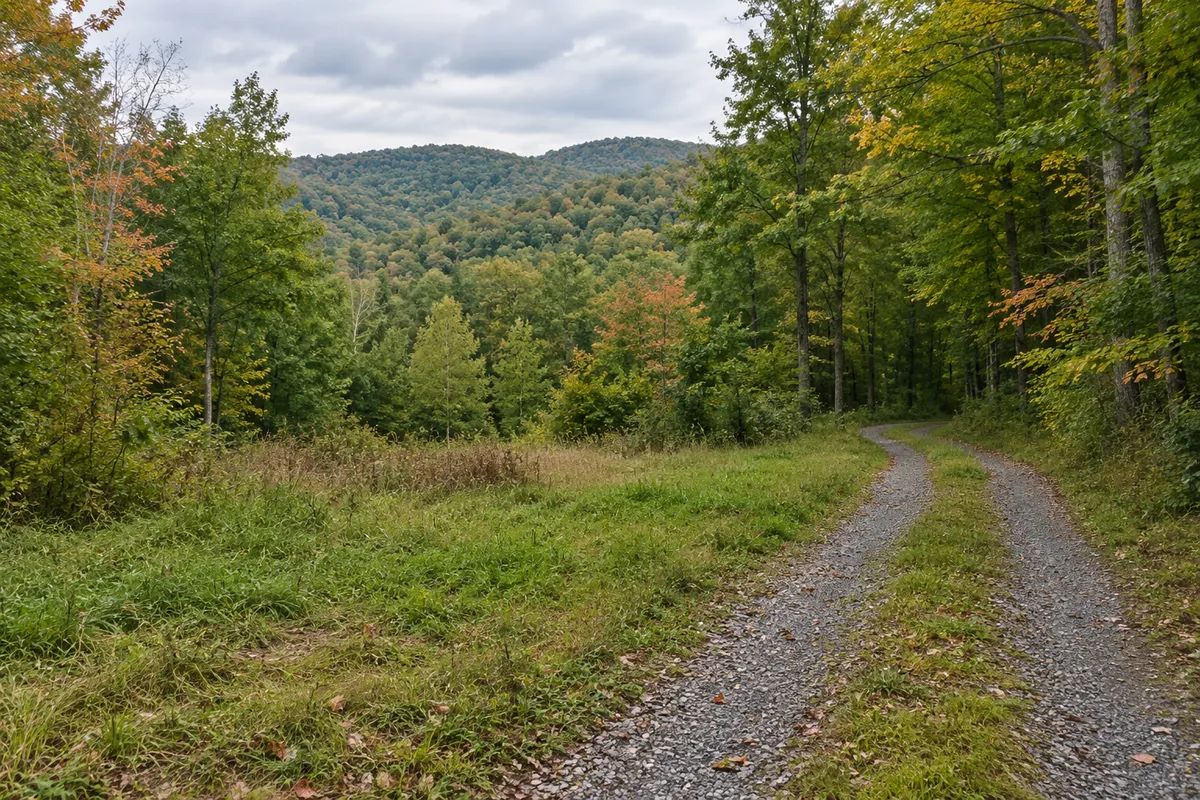
A small lot near homes in St. Marys and a wooded rural tract may attract different buyers. Don’t take a price from one and apply it to the other just because both are in Elk County. Match the size and setting, then look more closely:
- Getting onto the land: Is there road frontage and a usable entrance? If access crosses another property, look for the written right to use that route.
- The ground: Note slopes, open areas, woods, and wet places. Compare how much of the land fits the buyer’s plans.
- Services: A working water or power hookup is different from a line nearby. An old septic test isn’t the same as a system in use.
- Buildings: A house, cabin, or barn can account for part of the sale price. Check before using it as a bare-land match.
- What is included: Share any leases or papers about timber or mineral rights. Ask your closing team to explain what would pass to the buyer.
You don’t need to promise that a buyer can build or use the land in a certain way. Share the tests and approvals you have, and say which answers still need checking. Before paying for a new survey or test, ask a land agent what would help this sale.
Compare Whole Sales, Not Isolated Acres
Keep each complete deal on one row in a notebook or spreadsheet. A price per acre can help you compare similar land. It can also mislead you if the sale included other parcels or buildings.
| Keep with each sale | Question to answer |
|---|---|
| Date and source | When did it sell, and where did the price come from? |
| Parcel numbers and deed reference | Which pieces were in the deal? |
| Full price and total acres | Do the price and acres cover the same whole sale? |
| Access, services, and buildings | What else did the buyer receive? |
| Differences from your land | Why might a buyer pay more or less for yours? |
For made-up math, a $150,000 sale of 30 acres is $5,000 an acre. If those acres were split between two parcels sold together, use all 30 acres. Dividing the full price by just one piece would give the wrong figure.
A fictional $240,000 sale of a cabin and 6 acres is $40,000 an acre. That isn’t a bare-land price, because the buyer also paid for a cabin. These examples explain the math; they aren’t Elk County sales.
A small lot may have a very different price per acre from a large tract. Ask why an example is a good match. Also check whether the same deal appears more than once online. Keep one whole sale on one row.
Use the best matches to ask for a range for your whole property. Ask what could put your land at the high or low end. Our land-value guide explains other ways to check an estimate.
Find a Readable Deed Copy and Check What Sold
A deed is the paper that records a land transfer. Keep the deed reference with each completed sale you use. Ask the person helping with your price to check the land, sale date, buildings, and full price together.
The Elk County Recorder of Deeds page links to Online Deed Search. It says deeds from 1864 onward can be searched online. Earlier deeds need to be searched in the office. Public search terminals are also available there.
There are two useful details to know before you start. Guest access hides some information. Getting a readable saved or printed copy online requires an account with a credit card, and copy fees apply. If you don’t want to use that option, ask the office about getting a copy in person.
If an older deed reference uses a letter as its book number, the Recorder says to put four zeros before the letter in the search. For example, book B is entered as 0000B. Keep the page number and other recording details with it.
Finding a deed is different from a full check for loans and other claims against the land. Ask your closing team who will handle that check and explain anything that must be addressed. A title company or attorney can help. Don’t assume a search result settles a boundary or ownership question.
If you’re working through a loved one’s estate, you may need a value for a certain date or purpose. Ask whether an appraisal would help. That’s a written opinion of value. Explain what you need before ordering one.
Check Taxes Before Estimating the Money You Keep
A tax assessment is a value used to work out taxes. It isn’t an offer from a buyer. The county’s Assessment FAQ explains that the assessed figure is a portion of fair market value. Ask the Assessment Office about your record’s year and details before comparing it with a sale price.
If your land is in Pennsylvania’s Clean and Green program, keep the enrollment papers. This program bases taxes on the land’s use. The tax figure is not a current selling price.
A change in use or some divisions of enrolled land can lead to rollback taxes. Those are extra taxes that repay earlier savings. Before agreeing to split land or change its use, ask the Assessment Office at 814-776-5340 how your plan affects your property. Ask your closing team who would pay any amount due. Don’t assume every sale creates the same bill.
For current bills, use the tax collector shown on your bill. The Assessment Office’s page also links to Elk County Tax Collectors. For past-due real estate taxes, contact the Elk County Tax Claim Bureau at 814-776-5326. It explains that it can provide a tax certification, a statement about paid and unpaid taxes.
Share tax bills, loan papers, and any sale notices with your closing team. Ask what is due for each parcel and at the planned closing date. If you have a tax-sale notice, ask about the deadline and your options early. Planning to sell doesn’t resolve that notice by itself.
Compare Written Offers and Your Selling Choices
A price range helps you set an asking price. A written offer tells you one buyer’s price and terms. Ask how much you would keep after sale costs, taxes, loans, and other agreed amounts.
For a fictional example, a $90,000 offer minus $4,000 in sale costs and $2,000 in unpaid balances leaves $84,000. Another offer with a higher price might leave less after costs. Put both estimates side by side.
Read who pays the fees, what the buyer wants to check, when either side can cancel, and what happens to the deposit. Ask what must happen before you get paid. Our offer worksheet helps you keep those answers together.
You can list with an agent, sell yourself, or compare direct offers. An agent can help with pricing and finding buyers. Selling yourself means handling those tasks. A direct offer gives you one buyer’s terms to compare with your other choices. Weigh the work, timing, and money left after costs.
If you’d like a direct offer to compare, tell Reelvest about your land. We’ll review it and let you know if we can make an offer. You decide whether it works for you. See our Elk County seller guide for the steps from getting ready to closing.
Questions About Elk County Land Value
What is a useful price per acre for Elk County, Pennsylvania land?
There isn’t one rate that fits every property. Compare completed sales with similar acres, setting, access, services, and buildings. Ask a local land agent for a likely range for your whole property.
Can a small lot tell me what my wooded tract is worth?
Only if the person helping you can explain why it fits. A small lot and a large tract can draw different buyers. Compare size, access, ground, services, and what each sale included.
Where can I get help with my county land record?
Start with the Elk County Assessment Office at 814-776-5340. Have the parcel number, owner’s name, and any deed or tax bill ready. Its page says to call for an appointment to review assessment records.
Can I search Elk County deeds online?
The Recorder’s page links to Online Deed Search and says deeds from 1864 onward are searchable online. Earlier deeds need an office search. Guest access hides some details, and readable saved or printed online copies require an account and payment.
How do I enter an older deed book with a letter?
The Recorder says to put four zeros before the letter. Book B, for example, is entered as 0000B. Keep the page number and other recording details with the reference.
Is my Clean and Green value a selling price?
No. It is part of a tax program based on land use. Ask the Assessment Office how your sale, split, or planned use affects your enrollment and whether any extra tax could be due.
Who can help with past-due real estate taxes?
Call the Elk County Tax Claim Bureau at 814-776-5326. Ask about the current balance and a tax certification. For current bills, start with the collector listed on your bill. Share notices with your closing team.
Should I take the highest offer?
Compare the written terms and the money you would keep after costs and amounts owed. Also check buyer inspections, dates, and cancellation terms. You can ask questions or compare another offer before deciding.
Local source links reviewed October 4, 2026.