
Start with recent completed sales of land that buyers would compare with yours. Match the size, nearby roads, usable ground and services. A crop field and a small home lot may have very different buyers. Use Paulding County records to find useful details, then ask a local land agent for a price range with clear reasons.
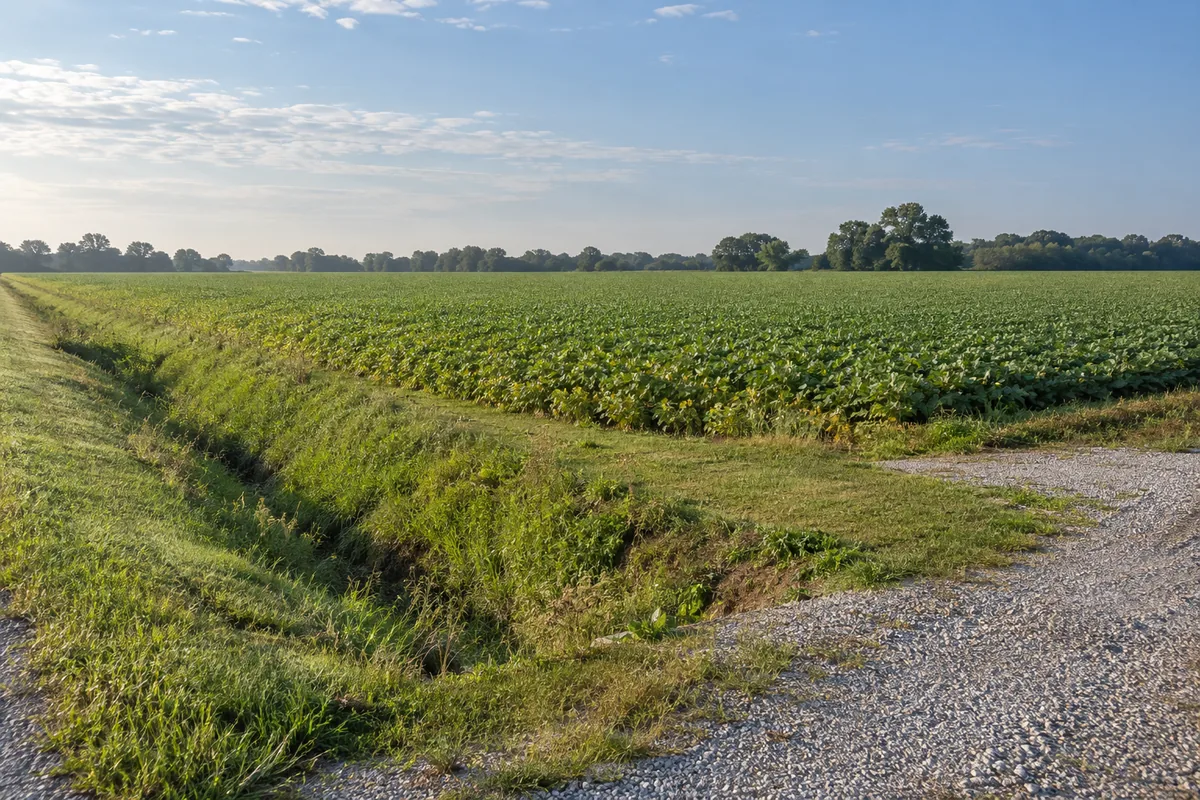
Put your land details on one sheet
Start with a tax bill, old deed or map pin. Write down the nearby road, size and land ID if you know them. The land ID is the county’s number for the property. Empty land may not have a street address.
Are you selling one piece or several together? List them all. Note any house, barn or other items included. You’ll need the same details for the sales you compare.
Keep any survey, road agreement or rental agreement handy. A survey is a measured drawing of the land. Take clear photos of the entrance, open ground and woods if you can safely. You don’t need to have every answer before asking a land agent for help.
Find Paulding County land records
The Paulding County Auditor search lets you look up land by owner, property number or address. A property number is the county’s ID for a piece of land. Have a tax bill handy if you have one. The Auditor’s office lists 419-399-8205 and 115 N. Williams Street, Suite 101, Paulding, OH 45879.
The Auditor’s home page also links to the county GIS data site. GIS is the county’s online map system. Use it to help find the right ground and nearby features. Check the date of a picture before using it; a map line alone does not settle a boundary or road-use question.
The Recorder’s site has a Records Search link for land papers such as deeds, mortgages and easements. An easement is a written right to use someone else’s land for a stated purpose. Keep any road-use paper with your sale notes.
The Recorder lists 419-399-8275 and 115 N. Williams Street, Room 103, Paulding, OH 45879. Have the recorded name and any document number or book and page reference ready. Ask which copy you need and what it costs. Finding a deed is a start; the closing team still needs to check ownership and any debts tied to the land.
Use the sale filters to narrow your search
The Auditor’s advanced search offers filters for sale dates, prices, townships, acreage and property class. Property class is the county’s category for a property. Start with a size and setting close to yours. Keep crop fields separate from small lots unless you can explain why the comparison fits.
The search also has a “Valid Sale” choice. Ask the Auditor what that means if you’re unsure. A filter helps narrow a list; it does not prove a sale is a good price match for your land.
Ask a local land agent to help read the results. Which entries are completed sales? Did any include a house, more than one piece or a special arrangement? Keep the source and the date checked with your notes. You don’t need to turn a long search list into a county average.
Choose sales that fit your land
Ask a local land agent for recent completed sales and why each fits. An asking price is what a seller hopes to get. A completed sale price is what was paid. Keep the two separate.
- Location: compare the nearby roads and setting, not just the county name.
- Road: compare how a buyer can reach the land. Share any written right to cross a neighbor’s ground.
- Slopes: compare the amount of level ground, steep ground and usable space.
- Size and shape: a small lot and a large wooded tract may attract different buyers.
- Services: compare water and power that are connected. A line nearby is not the same as a connection.
- Buildings: find out whether the price included a house, barn or other improvements.
Ask what supports the final price. If a sale’s details are unclear, keep that question beside the number. Don’t let a neat price-per-acre figure hide a poor match.
Compare the field, entrance and water
For farm ground, note how much is open and in use. Keep any rental or crop agreement with your sale papers. Ask how it affects a sale before promising the ground will be empty.
Tell buyers what you know about wet spots, ditches and any buried drains. Keep maps or repair notes if you have them. Two fields with the same acres may have different usable space and drainage. Ask the land agent how those differences affect a comparison.
Take photos of the entrance and main areas if you can safely. Share any written right to cross a neighbor’s ground. A route you have used for years and a written right are different details for a buyer to check.
For a smaller lot, share papers you already have about water, power or a planned home site. A septic system handles household wastewater. A field beside a road does not prove a home can be built there. Let buyers check their plans.
Before paying for clearing, drainage work or a new drive, ask whether the likely price gain would cover the cost. You can gather the facts and ask for price advice before starting a large project.
Count the whole sale once
Two entries with similar roads and prices may refer to one deal. Ask for the land IDs and recorded document before treating them as separate sales. Find out everything the buyer received for the price.
Here’s a made-up example: a $240,000 land-only sale includes a ten-acre piece and a thirty-acre piece together. That is forty acres in one deal. Divide $240,000 by forty to get $6,000 per acre. Giving each piece the whole price would count the same money twice.
This explains the math; it is not a Paulding County sale or an estimate for your land. Price per acre helps only when the price, size and deal details are checked.
For each match, write down the source, sale date, land IDs, whole price, total acres and buildings included. Add a short reason it fits. If the final price or deal contents can’t be checked, leave that number out of your estimate.
Ask for a price range you can understand
Ask the agent which sales support the low and high ends. What is better or worse about your land? Which missing fact could change the price? You should be able to follow the answer without learning a new set of terms.
A value on a tax record is not a completed sale or a buyer’s offer. Use it to ask questions about the record, then keep recent similar sales in the price discussion. If good matches are scarce, ask what else could help instead of filling the gap with an old county average.
You can use an agent, sell it yourself or compare a direct offer. Your time and the work you want to handle matter too. Our Paulding County seller page covers selling steps. Our land-value guide explains the wider price question.
Compare the money you keep
Ask which costs you pay and how a loan or unpaid taxes would be handled. Get an estimate of the money you keep before signing. Compare the closing date, buyer checks and any right to cancel as well as the offer price.
For a tax-bill question, the Treasurer’s site lists 419-399-8280. Ask the closing team who handles any amount due and where that appears on your closing statement.
Our offer worksheet helps put real terms side by side. If you’d like a Reelvest offer to compare, tell us about your land. You decide whether it works for you.
Questions About Paulding County Land Value
How do I find a price for my Paulding County land?
Start with recent similar completed sales. Compare location, size, road, usable ground, services and any buildings included. Ask a local land agent for a range with reasons, and check what each whole deal covered.
Where can I find Paulding County property and deed records?
Start with the Auditor search by owner, property number or address. Call 419-399-8205 for help. The Recorder’s site has a Records Search link for land papers; its office lists 419-399-8275.
Is the tax value what a buyer will pay?
No. A tax value is not a completed sale or an offer. Ask which year the record shows, then compare recent similar sales and the details of your own land.
What should I check before choosing an offer?
Compare seller costs, the money you keep, the closing date and written terms. Ask what the buyer must check, when it can cancel and how any loan or unpaid taxes will be handled.
Local source links reviewed October 6, 2026.