
Start with recent completed sales that fit your Mahoning County land. Compare the place, acres, road access, and what each buyer received. Ask a local land agent to explain a price range for the whole property. An open lot near homes and a larger rural tract can need very different matches.
Find Your Land Before Looking for a Price
Get a tax bill or deed and write down the parcel number. A parcel is one piece of land in the county’s records. If you’re selling more than one piece, make a list of every parcel you want to include. Keep the owner’s name, acres, and nearest road with that list.
The Mahoning County Auditor’s property search lets you start with an owner, parcel number, or address. Check that the record matches your papers. Note the acres and any buildings, and flag details that don’t look right. Call the Auditor at 330-740-2010 if you need help with a record.
Empty land may not have a street address. The Auditor’s FAQ suggests finding a nearby known address and using the county map to locate the lot. Once you find it, save its own parcel number. Don’t use a neighbor’s address as if it belongs to your land.
A map helps show where to look. It doesn’t settle a boundary question. Compare it with your deed and any survey you already have. Our seller paper checklist can help you put those papers together. You can start a pricing conversation while you look for a missing copy.
Choose Sales a Buyer Would Compare With Yours
Ask a local land agent for a few recent completed sales and why each one fits. An asking price is what a seller hopes to get. A completed sale is what a buyer paid. Keep listings and completed sales in separate groups.
The Auditor’s search also has an Advanced option. Its Sales Criteria include sale dates and price. Land Criteria include acres, and location fields include township and municipal area. These filters can help you find possible matches. A search result still needs checking before you use it to price your land.
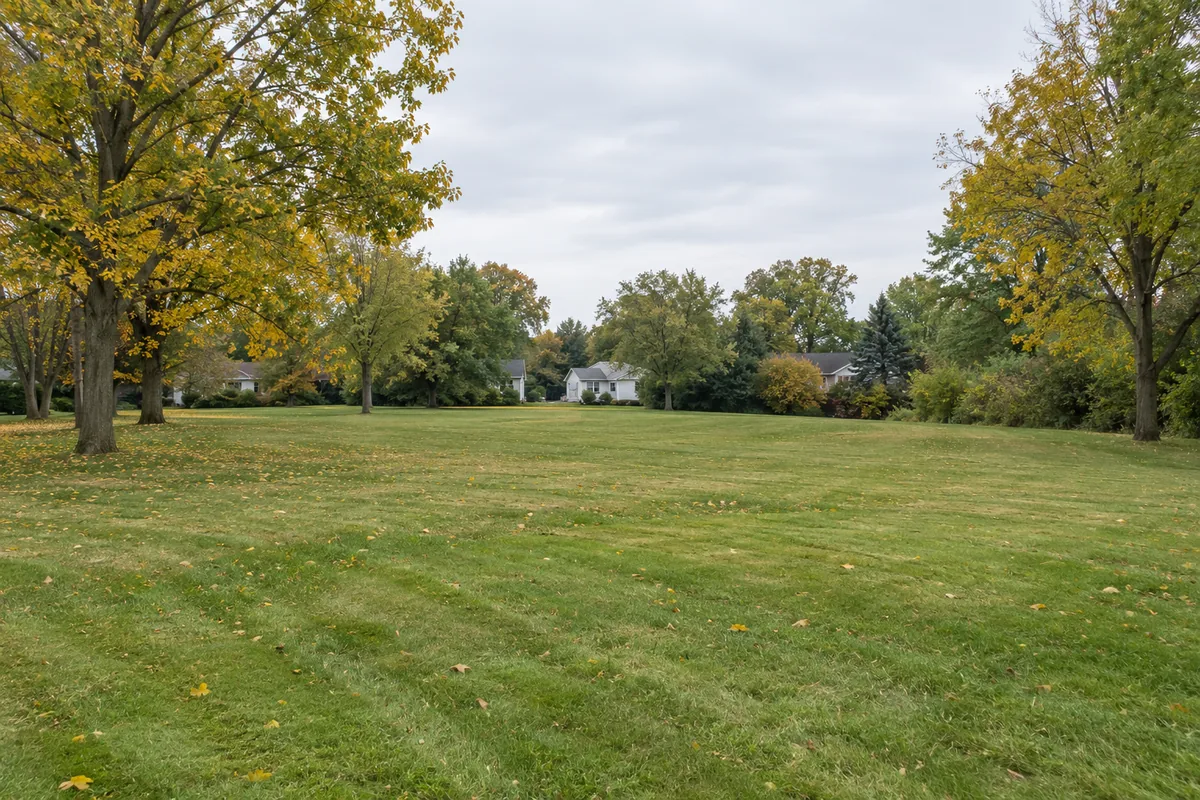
A small lot near homes in Youngstown can attract a different buyer from a large rural tract. Start with a similar size and setting. Then compare the things a buyer would get:
- Entrance and road: Is there a driveway or road frontage? If the route crosses another owner’s land, is there a written right to use it?
- Ground: Compare open areas, woods, slopes, and places that stay wet. Share what you’ve seen after rain.
- Water and power: A working hookup is different from a line nearby. Find out what is already connected.
- Use: Ask whether a buyer who wants a house, farm, or other use would face the same checks on both properties.
- What else sold: A house, barn, or other building may explain part of the price. That sale may be a poor match for bare land.
Nearby houses don’t prove your lot is ready for a house. Share any tests or approvals you have. Before paying for new work, ask a local land agent which missing answers would help buyers and which would do little for the sale.
Keep Each Whole Sale on One Row
Use a notebook or a simple spreadsheet. Keep the sale price, date, and all the land included together. That makes it easier to see a useful match and spot missing details.
| Write down | What to check |
|---|---|
| Sale date and source | When it sold and where the price came from |
| Parcel numbers and deed reference | Which pieces were part of the deal |
| Full price and total acres | The price and acres for the same whole sale |
| Buildings, access, and hookups | What the buyer got along with the land |
| Differences from your property | Why your price might be higher or lower |
For made-up math, a $160,000 sale of 20 acres works out to $8,000 an acre. If the deal included two 10-acre parcels, use all 20 acres. Dividing the full price by just one parcel would give the wrong result.
A fictional $280,000 sale of a house and 4 acres works out to $70,000 an acre. That is not a bare-land price, because the buyer also paid for a house. These examples show the math; they aren’t Mahoning County sales.
Don’t count a deal twice because it appears on two websites or under two parcel numbers. Ask which pieces sold together. If you can’t confirm the land, price, and date, leave that example out until someone can check it.
Ask an agent for a likely range for your whole property. Ask what would put your land near the top or bottom. Our land-value guide covers more ways to check a price.
Check What Was Included in the Deal
A deed is the paper that records a land transfer. Keep its recording reference with each completed sale. One address or search result may not tell you about every piece of land or building in the deal.
The Mahoning County Recorder lists copy and public-search options. If you know the recording information, you can ask for a copy. The office says its staff cannot search records for you. It has public computers for people who need to do a search themselves.
Call 330-740-2345 to ask what information to bring or how to request a copy you’ve identified. The Recorder also explains its online Laredo Anywhere service. It requires a sign-up sheet returned by mail, fax, or in person, so don’t expect to open every recorded paper without that step.
For pricing, ask the land agent or person helping you with the sale to confirm what each price covers. Check the deed, acres, buildings, and sale date together. A recorded transfer by itself doesn’t tell you that two properties are good price matches.
A deed copy also isn’t a full check for loans or other claims against the land. Ask your closing team who will do that work. A title company or attorney can help explain what must be taken care of before a sale.
If you’re working through a loved one’s estate, you may need a value for a certain date or purpose. Ask whether an appraisal would help. That’s a written opinion of value. Explain what you need before ordering one.
Separate Tax Value From Your Selling Price
The value in the tax record is part of the tax process. It isn’t a buyer’s offer. Check its year and the land details, then compare completed sales that fit your property.
Ask the Auditor at 330-740-2010 about a wrong acreage, building detail, or other record question. If your land has a special farm tax treatment, keep the papers. Ask how a sale or change in use might affect it and who would cover any amount due.
For the taxes still owed, start with the Mahoning County Treasurer at 330-740-2460. Have each parcel number ready. Ask for the current balance and what your closing team should check for the planned sale date. An old bill may not show everything due then.
The Auditor’s FAQ explains that special assessments can appear in the tax breakdown. These are extra charges, such as certain water, sewer, or lighting charges. It also says claims such as mortgages and judgments don’t appear on the property tax bill. So a paid tax bill alone doesn’t show that every amount tied to the land is settled.
Share tax notices, loan papers, and other bills with the closing team. Ask who will check them and explain what you would keep after paying the agreed amounts. If you have an unpaid-tax or tax-sale notice, ask about its deadline early. Planning to sell doesn’t take care of the notice by itself.
Compare the Money You Keep, Not Just the Price
A price range helps you choose an asking price. A written offer gives you one buyer’s price and terms. Ask what money would be left after sale costs, taxes, loans, and other agreed amounts.
For a fictional example, a $100,000 offer minus $5,000 in sale costs and $3,000 in unpaid balances leaves $92,000. A higher headline price might leave less after costs. Put the estimates side by side.
Ask who pays fees, what the buyer wants to check, when either side can cancel, and what happens to the deposit. Find out what needs to happen before you get paid. Our offer worksheet helps keep those answers together.
You can list with an agent, sell on your own, or compare direct offers. An agent can help set a price and find buyers. Selling yourself means handling those tasks. A direct offer gives you one buyer’s terms to weigh against other choices. Compare the effort, timing, and money left after costs.
If you’d like a direct offer to compare, tell Reelvest about your land. We’ll review the details and let you know if we can make an offer. You decide whether it works for you. See our Mahoning County seller guide for the steps from getting ready to closing.
Questions About Mahoning County Land Value
What is a useful price per acre for Mahoning County, Ohio land?
There isn’t one rate that fits every property. Compare completed sales with similar acres, setting, access, hookups, and buildings. Ask a local land agent to explain a likely range for your whole property.
How do I find empty land that has no address?
The Auditor’s FAQ suggests using a nearby known address and the county map to find the lot. Save the lot’s own parcel number. The neighbor’s address is a starting point, not your land’s address.
Can I search county records for recent sales?
Yes. The Auditor’s Advanced search has sale-date, price, acreage, and location fields. Use them to find possible matches, then check the whole deal before using a result to price your land.
Is the tax value what a buyer will pay?
No. It is part of the tax process, not an offer. Check the record’s year and property details. Use completed sales that fit your land to help choose a price range.
How do I get a deed copy?
The Mahoning County Recorder says you can request a copy if you know the recording information. Staff cannot search records for you, but public computers are available. Call 330-740-2345 about the copy and search options.
Does a paid tax bill mean nothing else is owed?
No. The Auditor’s FAQ says mortgages and judgments don’t appear on the property tax bill. Ask your closing team to check the amounts and claims tied to your land.
Who can help me check taxes still owed?
Start with the Mahoning County Treasurer at 330-740-2460. Have the parcel number for each piece you want to sell. Ask about the current balance and share any notices with the closing team.
Should I accept the offer with the highest price?
Compare the written terms and money you would keep after costs and amounts owed. Also check buyer inspections, dates, and cancellation terms. You can ask questions or seek another offer before choosing.
Local source links reviewed October 4, 2026.