
Start with recent completed sales of land that a buyer would compare with yours. Ask a local land agent for a price range and an explanation of the best matches. A small lot, an open field and wooded acreage can have different buyers and prices. Before choosing what to ask, make sure the comparisons cover similar ground and the right pieces of land.
Get the property details ready
Find a recent tax bill, deed and any survey you have. Write down the land ID, acres if known, closest road and entrance. A land ID is the number used to identify a piece of property. If you want to sell several pieces, list all of them and say whether they must sell together.
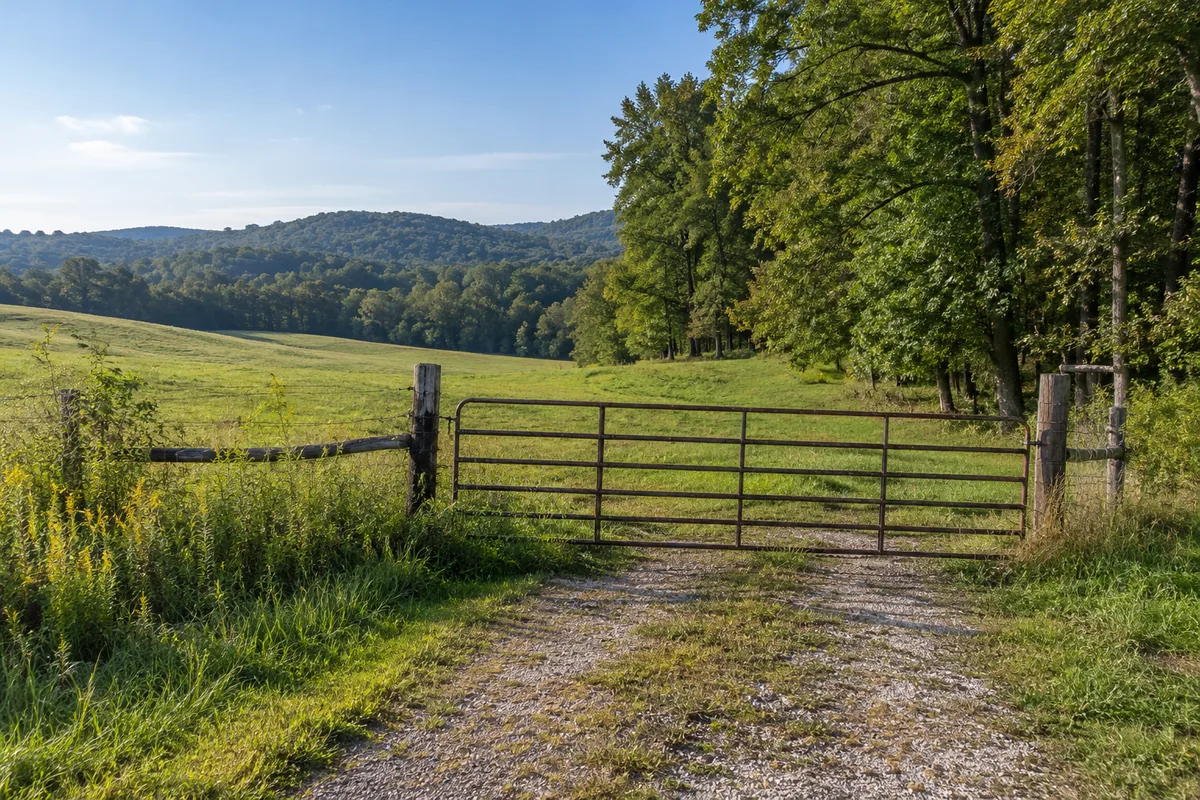
Take photos of the entrance, open ground, woods and any buildings. Say whether a house, barn or other items are included. If someone rents or uses the land, keep any agreement handy. The goal is to show what a buyer would actually get.
No street address? Use the nearest road and the papers you have rather than guessing one. The Recorder’s help page directs people who only have a land ID or don’t know the owner to start with the County Auditor. That can help you identify the property before looking for its deed.
Find a missing deed or an existing map
A deed records a transfer of land. The Recorder’s help page lists three copy choices: visit the office, mail a written request with payment and a stamped return envelope, or use its online search. It says recorded documents from 1980 onward are online.
The Clermont County Recorder lists 513-732-7236 and 101 East Main Street in Batavia. Ask which copy you need and the total cost before requesting one. Keep the owner’s name and any deed reference with your notes.
For a map, the help page separates recorded subdivision or city-lot maps from acreage without a lot number. It directs acreage map questions to the County Engineer and also mentions the Auditor’s property search. Ask which existing map fits your property before paying for new work. A map does not replace checking a boundary when that question matters.
You don’t need every paper to begin asking about price. If you’re handling inherited land or helping settle a loved one’s estate, gather what you have. Ask the closing team which papers and signatures it needs before choosing a firm sale date.
Compare land a buyer would see as a real choice
Ask an agent to explain two or three recent completed sales. Look past the county name and total acres. A useful match should help answer these questions:
- What kind of ground is it? Compare open fields, woods, slopes and wet areas. A flat open piece and a steep wooded piece may serve different needs.
- How does a buyer reach it? Compare the entrance and any checked right to cross another property.
- What services are there? A working connection is different from water or power nearby.
- What else comes with it? A price that includes a house or barn may not fit empty land.
Share any written lane agreement and service papers you have. Describe what is known and what still needs checking. Don’t promise a buyer can build because a house stands next door.
You don’t need to clear woods, put in a road or plan a home site just to ask about value. Before paying for work, ask an agent what it would cost and whether it is likely to add enough value.
Keep the completed price with the whole property
An asking price is what the seller wants. A completed sale price is what was paid. Keep them separate and ask how each final price was checked. Save a short note for each useful match:
| Keep this detail | Question it answers |
|---|---|
| Final price and sale date | Was it a completed sale or an ad? |
| All land IDs and deed reference | What property belonged to the deal? |
| Acres, entrance and ground | Why would a buyer compare it with mine? |
| Buildings or extra items | Was more than empty land included? |
Use one row for the whole deal. If several pieces sold together, don’t repeat the full price for each piece. If a road or town name differs between rows, check the land IDs before assuming they were separate sales.
Here is a made-up example. A two-acre property with a house sells for $300,000. Dividing gives $150,000 per acre, but the buyer also paid for the house. That figure is not a good way to price two empty acres. These are teaching numbers, not Clermont County sales or a value estimate for your land.
Ask for a price range and the reasons behind it
Have the agent explain which match is closest and what puts your land near the low or high end of the range. Keep unknown access, services or other details on the question list. Ask which answers could change the price.
A tax value can be useful background. It is not a buyer’s offer. A high asking price is not proof of what another seller received. If good completed matches are scarce, keep that uncertainty in the range.
For unusual land or a formal value, ask about an appraisal. That is a professional opinion of value for a stated purpose. Check the fee before ordering one. Our land value guide covers the general steps.
Look at the money you keep, not only the price
You can list with an agent, find a buyer yourself or compare a direct offer. Consider how much time and work each choice takes, along with seller costs.
Get the price, seller costs, planned closing date and buyer’s right to cancel in writing. Tell the closing team about any loan or unpaid tax balance. Ask what would come out of your sale money and what you would receive.
Use our offer comparison worksheet to compare real terms. The Ohio land seller guide covers the selling process. If you’d like a direct Reelvest offer to compare, tell us about your land. You decide whether it fits your plans.
Questions About Clermont County Land Value
Where should I start if I only have the land ID?
The Clermont County Recorder’s help page directs people who only have a land ID or don’t know the owner to start with the County Auditor. Keep the tax bill and nearest road handy so you can identify the property before finding its deed.
Can I get a deed copy online?
The Recorder’s help page says documents recorded from 1980 onward are online. It also explains office visits and mailed requests. Ask the Recorder which copy you need and the current total cost before requesting one.
Does a sale with a house tell me what my empty land is worth?
Not by dividing the full price by acres alone. The buyer also paid for the house. Ask for similar completed land sales and check the entrance, useful ground, services and other items included.
Do I need a new survey before asking about price?
You can begin with the papers and maps you have. Ask what still needs checking. Before paying for new work, discuss whether it is needed for your property and planned sale.
Local source links reviewed October 6, 2026.