
To estimate what your Randolph County, Indiana land might sell for, compare it with similar land that actually sold. Check the location, acreage, access and what each sale included, then compare offers by the money you would keep. A tax assessment or an old asking price is not an appraisal or a guaranteed offer.
Find the right parcel
Start with the parcel number and acreage on a tax bill or deed. The Randolph County Assessor's property-record guide explains how to search the county GIS by owner, parcel number or address. Compare the record with your papers, especially if you own more than one parcel. The assessor cautions that the GIS property card may differ from its current record; ask the office for the latest card if details are uncertain. A map is not a survey or proof of ownership.
Find sales worth comparing
The Assessor's Office says it provides county sales data, including valid vacant agricultural land sales; ask which records are available and how to obtain them. Indiana's sales disclosure search also has county, date, price and property-class filters, and requires a CAPTCHA.
For each possible comparison, note the parcel, sale date, price and acreage. Check whether it included buildings or more than one parcel, and compare road access, open ground, woods and leases. A family transfer or foreclosure may tell a different story from an ordinary vacant-land sale. Ask a local land agent or appraiser for help if you cannot verify the details; a search result is a lead, not automatically a comparable sale.
The older listing snapshot on this page was not checked against unique properties and completed sales. Its asking prices and counts could not establish a dependable value for your land.
Share what you know about drainage and access
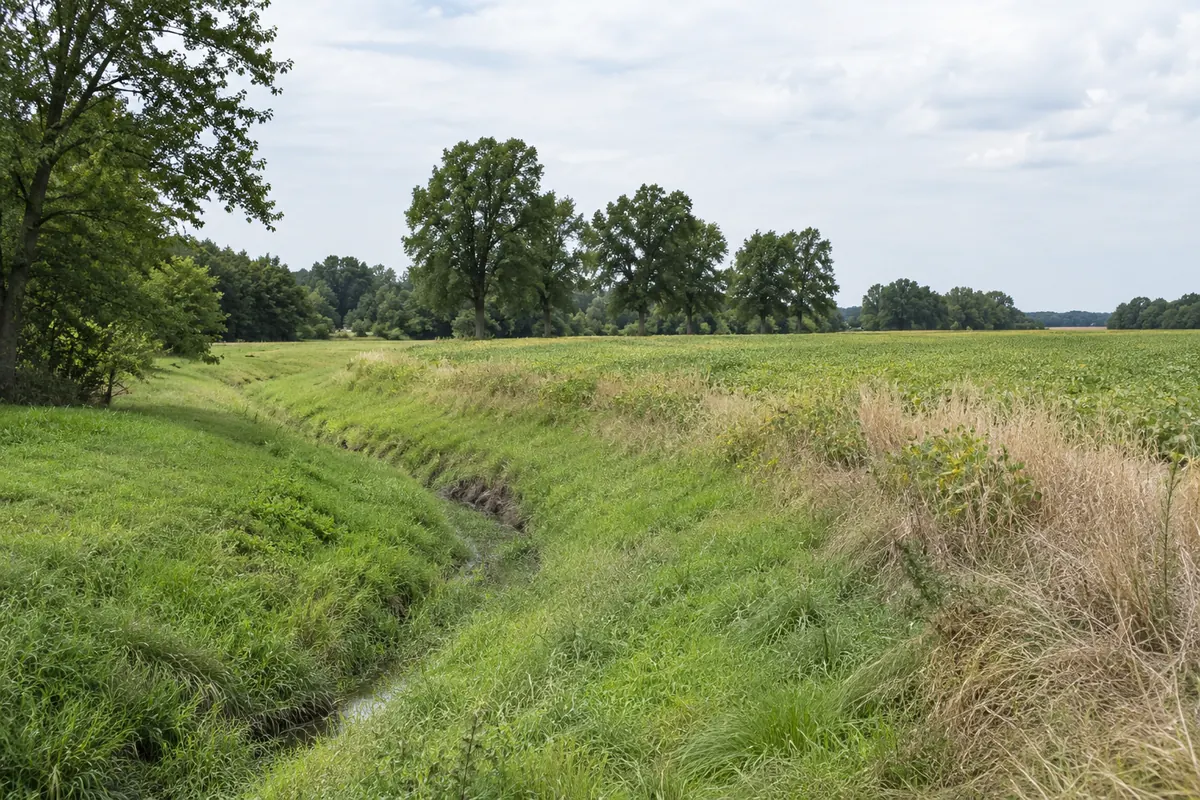
If you know about field tile, a ditch, a drainage agreement or recurring wet ground, tell a prospective buyer and share any records you have. The Randolph County Surveyor's Office maintains county drain-system maps and files. Ask the office whether its records can help with your question; a county map alone does not establish the condition of every drain on your land.
If access crosses someone else's property, look for a written easement or road agreement. The county recorder can help you find recorded documents; ask about access and current copy costs. A title professional can help interpret them. If you are handling inherited land, begin with the papers you have and ask who needs to sign.
Compare offers by what you keep
Ask each buyer for the price, seller costs, conditions and expected closing date in writing. For example, a $100,000 offer with $5,000 in seller costs leaves $95,000 before any loan or tax balance. This is an illustration, not a Randolph County price estimate. Compare a direct offer with listing through an agent or finding a buyer yourself, including the work and costs of each choice.
If you would like Reelvest to review the land, share what you know. You can start without every document and decide later whether an offer suits you.
Common questions
Is my assessed value the selling price?
Not necessarily. It is a tax record rather than an offer. Compare verified sales of similar land or ask an appraiser for an opinion.
Does a county drain map show every field tile?
Do not assume it does. Ask the Surveyor's Office what its records cover, and share any private plans or agreements you have with a buyer.
What if the land has no street address?
Start with a parcel number, map pin or nearby road, then check that the record describes the land you intend to sell.