
To price your Glades County land, compare similar land that has actually sold. Check the parcel’s location, acres, entrance, ground, and what the sale included. Keep small lots, larger tracts, and properties with houses separate. Then compare costs and terms to see how much money you’d keep.
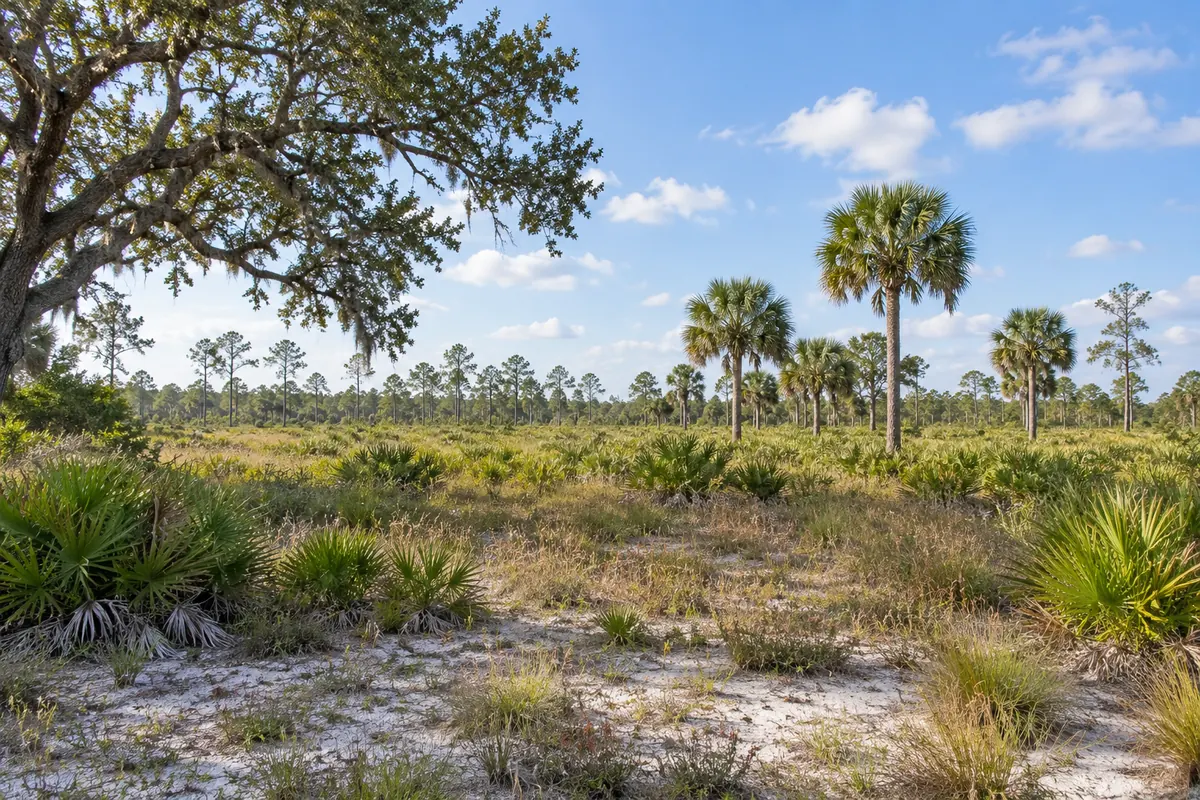
Start With the Parcel, Not the Town Label
Write down your parcel number, acres, and location. The parcel number is the number the tax office uses to identify the land. A recent tax bill is a good place to find it.
Keep each parcel separate if you own more than one. A listing might use a nearby town name or a mailing address. That label alone doesn’t prove which county the land is in. Check the actual parcel before choosing sales to compare.
Say what you own: a small lot, a larger tract, open land, woods, or land with a house. Note the entrance and anything else already there. You can begin with what you know and mark missing details as questions.
You don’t need to pay for every possible test before asking an agent or buyer about a price. Gather the papers you have, explain what’s missing, and ask what would help them give you a useful answer.
Find Your Glades County Land Records
Check the property appraiser’s record
The Glades County Property Appraiser site has “Property Records Search” and “GIS Map” links. GIS means an online map with property information. Start at the official site so you use its current links.
The search notice says the assessment information comes from the last certified tax roll. Check the record’s date and whether it includes buildings. A tax value helps explain the record; it isn’t an offer for your land.
If the acres, location, or another detail looks wrong, contact the property appraiser’s office at 863-946-6025. Have the parcel number ready if you have it. Empty land may not have a street address, and the address where your tax bill is mailed may be your home.
Find a missing deed or older paper
A deed is the paper that records a change in ownership. The Glades Clerk’s Records Search page links to official records, a separate “1988 & Prior” search, and plat maps. A plat is a recorded drawing of land divided into lots.
Have the owner’s name and any recorded book, page, or document number handy. If you don’t know which search to use, call 863-946-6010 and ask how to find the copy you need. Ask about copy costs before ordering. Check the office’s current notice before making a trip.
If you’re handling inherited land or helping settle a loved one’s estate, gather the papers you have. Ask the attorney or title company who needs to sign. A title company checks ownership papers and helps handle closing. Missing papers don’t have to stop the first price conversation.
Choose Sales That Fit the Land
Ask a local land agent for recent completed sales they would use to price your parcel. Ask why each one fits. A listing shows what a seller hopes to get. A completed sale shows what a buyer paid, once you’ve checked the record and what was included.
- Check the county and location. Match the parcel itself, rather than a town name on a listing.
- Keep similar sizes together. A small lot may serve a different buyer than a large tract.
- Compare the entrance. Note whether someone gets there from a road or crosses another property.
- Compare the ground. Look at open areas, trees, and wet spots you know about.
- Check what came with the sale. A house, buildings, equipment, or several parcels can change the total price.
- Save the proof. Keep the parcel number, sale date, and deed or sale record that supports the price.
If two websites show the same land, don’t count it as two sales. Similar road names and acres can also hide overlap. Check the parcel and deed before deciding that entries are separate.
A sale of several lots together may not tell you what one lot would sell for alone. Ask an agent to explain the difference. Don’t assign the whole price to each lot or split it evenly without a reason.
If you can’t find close matches, ask for a price range and an explanation of what’s uncertain. A precise-looking county average won’t fix poor comparisons. Our land value guide explains the basic steps.
Give Buyers a Clear Picture of the Land
Buyers may want to see the entrance, open areas, trees, and any wet spots. Share current photos if you have them. Say when you took them, especially if the land looks different at different times of year.
If you’ve seen standing water, say where and when. Don’t assume all of the land stays wet, or promise that one dry-day photo shows how it always looks. What you’ve actually seen is useful even if you don’t know the cause.
Describe how you reach the land. Share any old survey or written access paper you have. A nearby road or a path across someone else’s land doesn’t by itself answer every access question.
You don’t have to turn your land into a building project before selling it. If a buyer wants to build, ask what they need to check and who pays for those checks. Share any past permit or approval you already have, but don’t promise a new use from a map or a nearby house alone.
If you’ve used the land for farming or grazing, say what you know about that use and any lease. Keep the sale’s included items clear. A buyer’s plan, a tax classification, and the land’s current condition are different parts of the conversation.
Compare Small Lots and Larger Tracts Separately
For a small lot, begin with total prices for similar lots. For a larger tract, price per acre can be a useful check after you’ve chosen good matches. It can’t choose the matches for you.
Here’s a made-up example: a 10-acre tract that sells for $150,000 works out to $15,000 per acre. A quarter-acre lot that sells for $25,000 works out to $100,000 per acre. Neither number is an actual Glades County sale or a price estimate. The small-lot rate doesn’t make the larger tract worth $1 million.
Keep a short note for each match: parcel number, acres, sale date, total price, entrance, features, and what the price included. Add the source of the number and why it fits your land.
Don’t compare a sale with a house to bare land without help accounting for the difference. Don’t simply subtract a guess for the house. It may be easier to find a different match.
Ask an agent which sales carry the most weight and why. If they suggest an asking price, ask what would make them change it. You can also compare a direct buyer’s offer. An asking price is a starting point; an offer is what a buyer proposes to pay.
Keep Agricultural Tax Value Separate From Sale Value
The property appraiser’s agricultural classification page explains that qualifying land can be valued based on agricultural use. That is a tax benefit, not a price a buyer must pay.
Agricultural classification isn’t proved by acres alone. If your land has it, tell the closing professional and ask the property appraiser how the proposed sale or a change in use could affect it. Don’t promise that a buyer automatically keeps the benefit.
For taxes, start at the Glades Tax Collector’s official site. It has online property-tax information and payment links. Call 863-946-6035 if you need help with a bill. Keep a receipt for a recent payment and ask the closing team to check the amount due through the sale date.
You can use the tax record to check the parcel and prepare for costs. Use completed sales and the buyer’s terms to compare prices. Those numbers serve different purposes.
Compare Offers by the Money You Keep
You can list with an agent, sell the land yourself, or sell to a direct buyer. Compare the work, costs, checks, and timing of each path. You decide what fits your needs.
Ask what comes out of your payment: unpaid taxes, a loan balance if there is one, agent fees if you use an agent, and closing costs. Get the answer in writing.
For a made-up example, a $100,000 offer with $8,000 in seller costs leaves $92,000. A $97,000 offer with $4,000 in seller costs leaves $93,000. These aren’t actual offers. They show why the headline price doesn’t always tell you which offer leaves more money.
Ask when the buyer’s checks end, what could change the deal, who pays each cost, and when you get paid. Consider the time and work you want to put into selling too.
Our land seller document checklist can help you gather papers. The guide to selling land in Glades County explains the full process.
If you’d like a direct offer to compare, tell Reelvest about your land. Share what you know and what’s missing. You decide whether an offer works for you.
Questions About Glades County Land Value
Can I price Glades County land from a county average?
Compare similar completed sales instead. Check the parcel’s actual location, acres, entrance, ground, and what was included. A county average can mix small lots, large tracts, and properties with houses.
Where should I start looking for my parcel record?
Use the official Glades County Property Appraiser site and its Property Records Search or GIS Map links. Have the parcel number ready if you have it. Call 863-946-6025 if you need help with the record.
How can I find an older Glades County deed?
The clerk’s Records Search page has an Official Records 1988 & Prior option as well as its other official-records links. If you’re unsure which to use, call 863-946-6010 with the owner’s name and any recorded numbers you know.
Does agricultural classification set my selling price?
No. It can affect the tax value of qualifying land. It isn’t a buyer’s offer. Ask the property appraiser how a proposed sale or change in use could affect the classification.
What should I do if I’ve seen water on the land?
Tell the buyer where and when you saw it, and share dated photos if you have them. Don’t guess that the whole parcel always stays wet or always stays dry. Ask what the buyer needs to check for their plans.
Can I start without a new survey or every document?
Yes. Start with a recent tax bill and whatever deed, map, or survey you already have. Tell the agent or buyer what’s missing. Ask what the sale needs and who would pay before ordering new work.
Local source links reviewed October 7, 2026.