
Start selling Windham County land by naming the town, locating the parcel and gathering the papers you have. Deed records are kept at the town level. For older records, ask about the town’s archive rather than assuming one online search covers every year.
This page uses a historic county name. The Census Bureau now uses nine planning regions for county-level statistics in Connecticut. Share your town and any county or region you know. Read the source.
Tell us about your land. There’s no obligation to accept an offer.
Start with what you know. These steps will help you get ready and choose the way to sell that fits you.
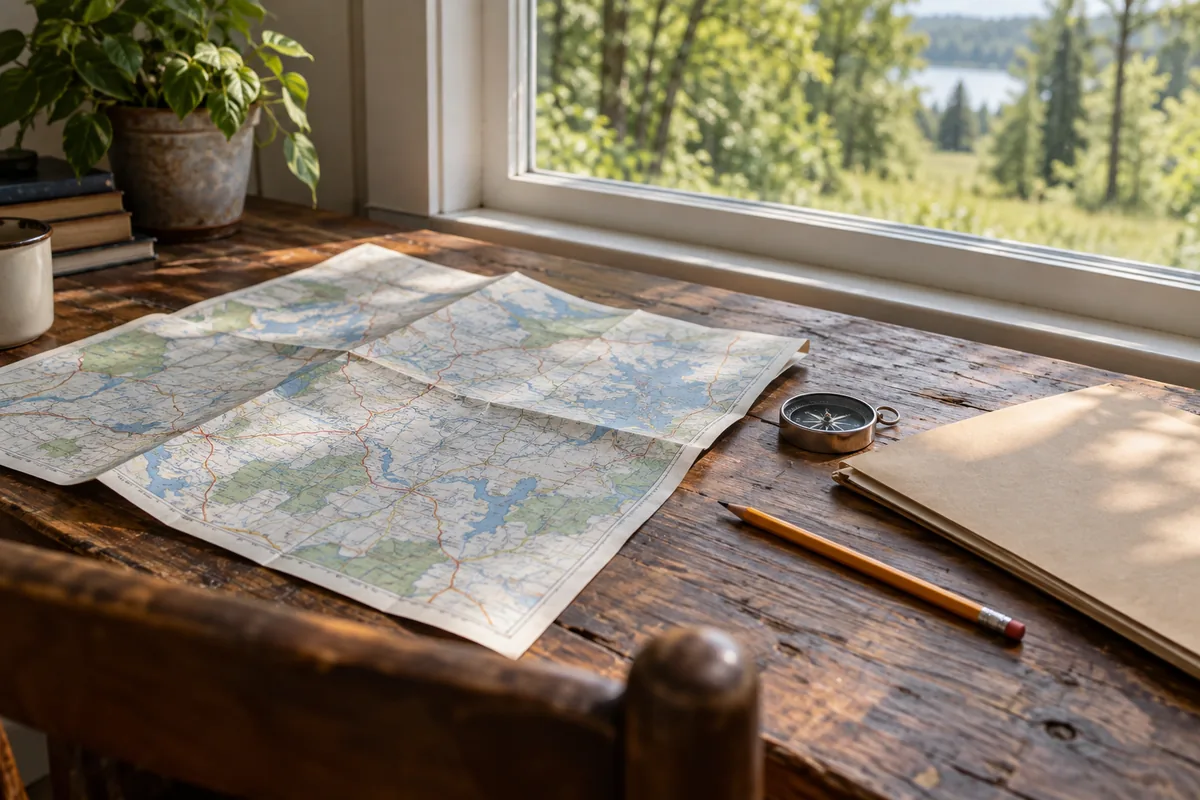
Find a tax bill and write down the town, parcel or account number, acres if known and owner names. Add your deed, a map and directions from a public road. If there are several tracts, keep one line for each.
In Connecticut, land records are kept in the town where the land lies. This is explained on the Town of Tolland’s records page. Within Windham County, use the clerk for your property’s town. The Town of Windham’s records are one example, not a countywide search.
For land in the Town of Windham, the Land Records page links to online searching and instructions for older index books. It says records before 1966 were filmed and can be searched in that system. The records can also be viewed in the office.
Keep the names, date and any book and page from an old deed or title report handy. If you cannot locate a copy, tell the clerk what you tried and ask which book or search route comes next. For land in a different town, ask its clerk about that town’s online years and older books.
Save the full paper when you find it. A list of names and a search-result date can help locate a record, but may leave out the detail a buyer or closing team needs.
The Town of Windham Clerk page warns that scanned text on its website can have errors or miss handwriting and signatures. It says the original signed or printed record controls when there is a difference.
If a name, land description or other important line is unclear, ask the clerk about an original or certified copy. Keep a note of the exact page and question. Do not change your sale description to match a word that may have been read wrongly by a computer.
This is a focused records check, not a reason to delay every conversation about selling. Tell the agent or buyer what is still being checked and ask which answer matters to the offer.
Write directions to the entrance, including gates and shared drives. Say who should arrange a visit and share any written access agreement if the route crosses another property. Keep recent photos with their dates.
Gather well, water-service, septic and power records you already have. Name what is known and what is unknown. Share any lease or other use agreement and list buildings, equipment or other items included in the sale. Let a buyer ask the proper town office about its own proposed use.
Compare completed sales with similar access, usable space, slope and known services. Then compare acreage. A small lot with services may be a poor price match for a larger tract without them.
Keep asking prices and town tax values separate from completed sales. Note each useful sale’s date and main differences. A local land agent or appraiser can help explain a range when few good matches are available.
An agent can help with price, marketing, visits and offers. Ask about fees and listing length. Selling it yourself gives you more of those jobs. A direct buyer is another route to compare with the work and time involved.
Check each offer’s town and parcel list, price, seller costs, deposit, buyer checks and target date. Ask when either side can cancel. Request an estimate after taxes, loans and fees; our offer worksheet helps you compare.
Reelvest buys land directly from owners. Tell us about your land if you want an offer to compare. You decide whether the terms work for you.
Ask who will handle closing and what papers it needs. Mention other owners, an old loan or a name change early. If you are handling inherited land or helping settle a loved one’s estate, ask which documents and signatures are needed.
Agree who will handle each remaining question and how it affects the target date. Confirm how payment will reach you. See our document checklist and Connecticut seller guide for more help.
Start with the clerk in the town where the land is located. The Town of Windham’s system serves that town rather than every town in the county.
The town Land Records page says those records were filmed and can be searched online, with older index-book instructions linked there. Ask the clerk if the copy is hard to find.
The Town of Windham warns that scanned text can miss or misread details. Ask the clerk about the original or a certified copy when an important line is unclear.
Yes. Share the records you have and explain the question. Agree who will check it and how it affects the offer or closing date before relying on an answer.
Local source links reviewed October 27, 2026.