
Before paying for a survey, share any existing copy with the buyer and the title company or attorney handling closing. Ask which question needs an answer and whether a lender has a survey requirement. The work needed, who pays and when it must arrive depend on your land, local rules and written sale terms.
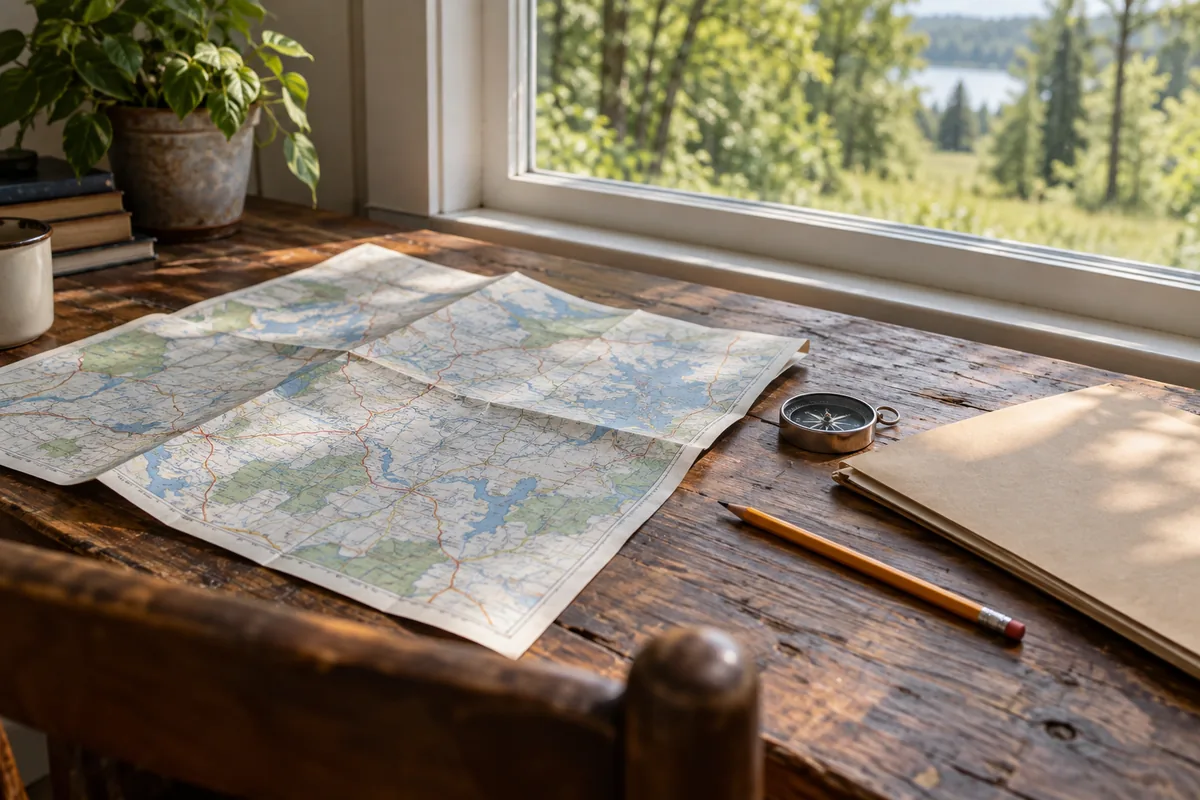
Start with the full survey and deed you have
Look in your earlier closing file for a survey, deed, plat and title papers. If a copy is missing, ask the firm that handled that closing or the surveyor named in the file. Keep all pages and notes, not just a cropped picture.
Original review checklist: survey date and surveyor; land covered; deed reference; readable notes; and changes you know about. Note later land sales, added land, moved fences, roads or buildings. For several tracts, check which ones the drawing covers.
Share the file and changes with the closing team. Ask who must review the copy and whether it answers the sale question. An old date alone does not tell you what work to order; neither does having a copy prove that every buyer or lender will accept it.
Ask what a survey would need to answer
A useful question is specific: “The deed and map show different acres,” or “The buyer’s lender has asked for a survey; what must it show?” Ask the buyer, lender when involved, and closing team to state the need before you seek quotes.
For a boundary question, speak with a licensed land surveyor about the right scope. California’s licensing board consumer guide lists retracing property lines and checking boundary differences among survey services. Local project rules and the needed work vary, so use a professional authorized where the land lies.
A new split, a boundary dispute and a whole-tract sale with clear existing papers are different jobs. Ask whether review of an existing copy, added work or a new survey is needed. Do not promise that one type will solve every question.
Keep online maps in their proper role
An online parcel map can help explain location during sale talks. Keep it with the deed and existing survey rather than treating a drawn line as the answer to a boundary question.
As one county example, San Diego’s Assessor says its maps serve assessment purposes and do not establish survey accuracy. The office also does not determine legal ownership or permitted use. Check the notices for the map you use.
If papers disagree, save both and describe the exact difference. Do not move markers, redraw a firm boundary or treat a fence as proof. Ask the surveyor and closing team which review fits the question.
Get a quote for the actual work
Tell a surveyor whether you are selling the whole tract, an existing lot or a proposed part. Share the deed, available survey, title papers requested for the work and the written question. Ask what else is needed for a useful quote.
Ask what is included, what you will receive, when it may be ready and what could change the price. Compare quotes for the same scope. There is no useful nationwide price to plug into every vacant-land sale.
The California board’s guide stresses clear services, payment terms and handling of changes in a written agreement. Use that as a question list, not a substitute for your state’s rules. Check the professional’s license with the state board; California has an official license lookup as one example.
Agree who orders, who pays and what happens next
Ask who chooses and hires the surveyor, who pays and when payment is due. Have the person handling your sale agreement put the agreed terms in writing. Providing an existing copy is a different promise from paying for any further work.
Ask what happens if the copy is not accepted, added work costs more or the sale does not close. Check the agreement rather than assuming the seller or buyer always pays. A quote is not the same as a final checked closing cost.
Compare offers with the full costs and terms. An agent can help market the land and review offers; selling yourself means handling those tasks. A direct buyer is another route. Use our offer worksheet to compare the amount you may keep.
A made-up example: turn a mismatch into a task
Original example: your old survey says about eight acres, while a saved county record shows a different figure. A buyer asks for the difference to be checked. These are made-up facts, not a finding about your land.
First, send both full papers to the closing team and ask what needs an answer. Next, have the right professional explain the needed review. If more work is proposed, get a scope and quote before agreeing who will order and pay for it.
Ask whether the written price is for the whole tract or changes with measured acres. If a new result or delay affects the deal, ask who will review it and how any price or date change must be documented. Do not turn the first map mismatch into a promise to buy every possible service.
Start sale talks and keep the open item clear
You can discuss a sale with the papers you have. Tell the buyer what is known, which copy or question remains and who will follow up. Before relying on a closing date, ask which survey-related approvals or papers are still needed and how payment will arrive.
Our document checklist helps track the file. If you want Reelvest to review the land for a direct offer, share your land details and say whether you have a survey. You do not need to order one just to ask about our review process.
Seller Questions
Must every seller buy a new survey before speaking with buyers?
Start by sharing the existing papers and asking what the sale needs. The buyer, lender when involved, closing team and local requirements may call for further work. Do not assume the same answer fits every tract.
Can an old survey be used?
Ask the closing team and anyone requiring the survey to review it. Share all pages and known changes. Its age alone does not answer whether it fits the job.
Who pays for the survey?
Check and agree on the written terms. Ask who hires the surveyor, who pays, when payment is due and what happens if more work is needed or the sale does not close.
What if the survey shows different acres or arrives late?
Ask the surveyor and closing team to explain the finding or delay. Check how the agreement handles price and dates, and document any agreed change in the proper form.
Local source links reviewed October 27, 2026.